R, や, 民, 尸, maybe sousho u-kanmuri 宀
A, sousho 林
N, ん, れ
S, 乙, 弓, し, numerous hentaigana
F/E, 乍,れ, 馬, maybe hentaigana の from 能
&c.
Silly, but kinda fun, and probably decent practice for connecting in elegant and/or interesting ways.
ki no kage ya: a student's blog of Japanese language and calligraphy
かつて。That's a new one. I've been encountering lots and lots of vocab that's new to me, but you'd think, in studying 短歌 (tanka) and 昔話 (folk tales), I'd have some across かつて somewhere. Once, used to be. (The classic start to a folk tale is 昔々, mukashi mukashi, equivalent to once upon a time—different sense of once? I do see examples of it as interchangeable with 昔. かつては、ここに教会があった。There used to be a church here.) Apparently, with a negative verb it can refer to something that hasn't happened yet, never has, I guess as もう can. かつて僕のだった、これ。これはかつて僕のじゃない? I have seen (negative) かつてない; Weblio.jp says for katsute nai, 「今までにない、過去に前例がない、といった意味の言い回し」—not up to now, not so far, no such precedent.
From 嘗て. Henshall doesn't list the kanji; the MS IME does substitute 嘗 for かつ in "かつて". Variant kanji is 甞. katsute 嘗て, nameru, kokoromiru... なめる and licking? To be followed up on, sometime when it's not (already) almost 7am...
| 一枝に | hito eda ni | in one branch |
| 光のこして | hikari nokoshite | light remains |
| 里の春 | sato no haru | spring in the village (back home) |
The straightforward reading is that (sun)light just remains, but shifting to transitive—what?—implies a subject, someone who is leaving the light there? Certainly, a new way of looking at the poem.
Proverb:
虎は死して皮を留め
人は死して名を残す
tora ha shishite, kawa o todome;
hito ha shishite, na o nokosua tiger dies and leaves its skin;
a person dies and leaves their name (o nokosu)
The person (人) leaves (残す) the object (名を).
を vs が: "結果だけが残る!!!"
—only the results/consequences remain (ga nokoru)!
That light, in that one branch—has someone left it there?
才, 材. オ. 歳.
才能, 才気, 才女, 才子, 才人, 才覚, 才力. 財 (which Henshall says a bit dubiously is composed of both shells/money 貝 and, ideographically and phonetically, a dam 才).
Talent meets age. Maybe in this case of age it's just a tl;dw ("too long; didn't write") form of 歳, with the cross-stroke recalling 戈 (and maybe 矛). Or is there a connection between age/experience and increasing aptitude/capability?
Of course, similarity in structure, appearance, feel, or sound doesn't necessarily mean any type of thing.
(The image is of spears/pikes 矛, from the Shimane Museum of Ancient Izumo 島根県・立古代・出雲・歴史・博物館. 才, 弋, and 矛 all seem to involve weaponry, be it spears, halberds, or bows.)
才弾ける? (a snapping string? 琴を弾く? 引く? 弾ける? 弾傷?)
Will have to suss out all this.
(Learning a lot from Duolingo and spending a lot of time asking questions on the message boards there. Doesn't hold a candle to studying with 先生, but better to stay engaged than not to!)
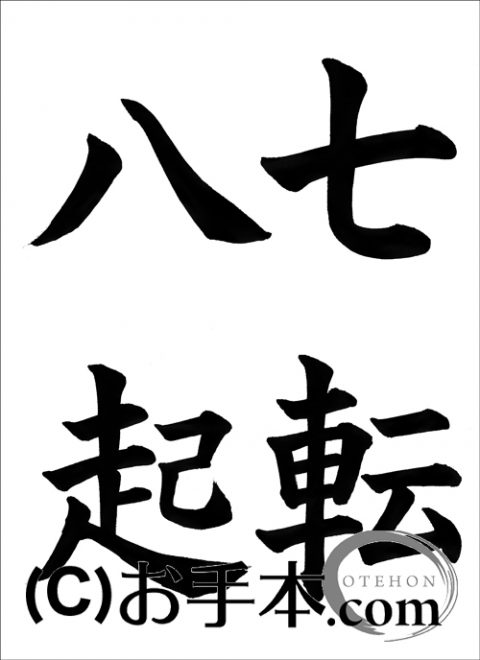
A thing I like a lot about learning kanji is the intersections of their meanings. In this case, we have 起, which I first learned as okiru/okosu, in the sense of awakening / getting out of bed or "knocking someone up"—i.e., awakening someone. Here, it's literally to rise after falling.
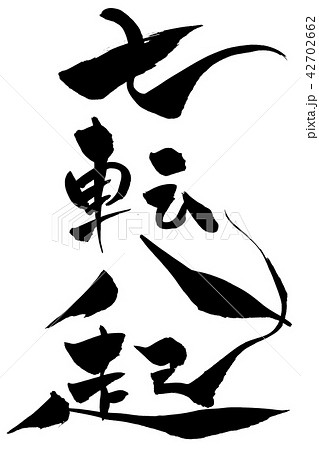
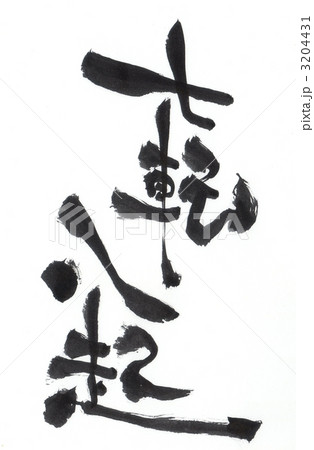
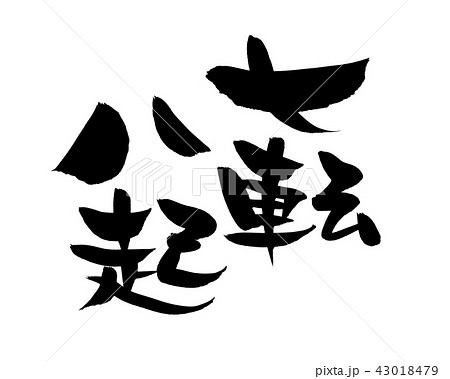
I've done a lot of falling down for a long time now and am in the process of getting up, so it seems appropriate. Shichi and hachi both are relatively simple—and hachi, of course, is of particular significance to me—so they have to be really right.
Examples below—thoughts? #八Rising
(Note: Work in progress; images are coded to link through to the source, but I'll have to fix. I'll look through them all after a nap; better just to post what I have, as I have dozens of drafts never finished!)
I'm thinking of breaking them up as
浅き (asaki)I've had a project of this kind in mind for years and have practiced variations with fude-pen, and ultimately I'd like to add the other parts of the Iroha throughout the house, but—especially with a text so important—I don't trust my aesthetic judgment. 頑張りましょうね。
夢 (yume)
見じ (miji, mishi)
営も (ei mo, wehi mo, yoi mo)
せず (sezu, sesu)
I haven't blogged in a while—or at least hit "post" on anything I've been thinking of—but I still exist. In some form. :-D
♥
木蔭
おめでとうございます!I don't know whether it's assessing my enthusiasm or my developmental age. Maybe the next generation of emoji will ask you to input smile intensity, on a scale or by degree.
おめでとうございます!!
or
おめでとうございます!!!
Just as my quiz app served me "迷"—"to lose one's way"—a little girl toddled up to me in the grass and waved hello. I said, "Hey, there. 道に迷っちゃったんですか?" There wasn't a 道 to have lost, but I think she got the idea.
The kanji 迷 (MEI, mayo・u) is a favorite of mine, for its mnemonic. It's the movement/road radical (SHIN'NYOU, 之繞), then "rice" (米), which per Henshall may be phonetic or derive from "unfinished" (未), suggesting indecisiveness. As 米 also stands for the US, though, to me this is an American in the older streets of Japan: utterly lost. Perplexed. Like rice in the road. He MEI never figure it out. (笑)
To quote the JLPT, 「いい天気ですから、散歩しましょう。」
でも、道に迷わないように気を付けようね。
The logo on the bottom is an encircled dotted double mountain, with the letters MTPI, and below that two kanji. The second of the kanji is 通 つう tsuu; that's easy. The first should be easy—it's just 門 with 虫 inside, 14畫—but I can't find any trace of it, in either Japanese or Chinese kanji resources. You'd think it would show up as a variant, at least, or a simplification of something older.
Fun: The older (pre-simplified) form of 虫 apparently is 蟲—just the same kanji, but three times—insect, insect, insect!!! Jisho.org defines it as an insect but also as "temper"; there must be more of a story behind that. Henshall says little but that the basic kanji represents a partially coiled snake and that anciently snakes and insects were not differentiated; I find the latter part hard to believe. If one or the other were in your bed, you'd know the difference.
The Book includes the kanji 門+虫—examples of it as written by eight calligraphers—but doesn't give a reading for it. (I'm sure it's indexed by sound, but that's not helpful.) My suspicion, given that 虫 can suggest a serpent or worm, is that the kanji mean something like "dragon pattern". Jisho gives variants for 竜, but nothing seems likely. Mysterious....
(My reading the English word Korea as かんこく is exciting and worth wondering about, for me. Also, What exactly that appellation means and to whom....)
四畳半
炉に懐紙落ち
暑い秋
yojouhan
ro ni kaishi ochi
atsui aki
face-down on the mats
papers slip into the fire—
a very warm autumn!
...or something like that. I was trying to do something more tankaësque, with 炎秋になり, or at least a good 哉, and to play with a too-hot fire vs the cold of an autumn/winter tearoom, but maybe later. There must be set phrases in classical poetry to describe warm/mild winters. Maybe a specific plant or bird. I'll have to check some kigo dictionaries.
And I'm not sure what I did with 落 was legal. It feels right, though—continuous—and fits the meter. I think I'd prefer 秋暑い. Hmm.
I've only heard these terms, so I can't be sure; the bow on entering and leaving class itself may in fact be a 師礼 (shirei), a bow to the teacher, though how that would differ from shin, I'm not sure.
I gather the shin-gyou-sou paradigm applies to other contexts in Japanese culture; certainly it's there in calligraphy (書道)—kaisho 楷書 as, though maybe not most formal, standard; 行書 as the more fluid "cursive script"; 草書 as writing so stylized and/or introspective as often to be illegible.
Recently I've learned of the phrase dogeza 土下座, which is literally down-ground-position but can be translated as "prostrating oneself"; in practice it seems similar to the shin 真 bow. How are these different? Are they?
In Tea class, the shin bow is done from seiza (kneeling), hands fully down on the mat at chest level, fingers and thumb together, elbows out, nose almost to the mat. It's measured and respectful in Tea, though I guess not always in other contexts:
To me, the English phrase to prostrate oneself means something else entirely: It's a body position derived from Catholicism, expressing total subjugation, repentance, humility. Body face-down on the floor, feet together, arms either at the sides or out at a right angle, to form a cross:
But a search turns up far more instances of 土下座 as prostration, so I must just be thinking of it from my own background.
I love looking through these examples by the old masters; I wouldn't say you can feel the person who was writing, but you can feel the energy with which the writing was done. Some writings are Correct and authoritative; some are somber or subdued; many are playful or energetic; some are made to look like something else. There's an expressiveness to kanji that English, love it though I do, doesn't afford.
The kanji in question isn't iki; it's one I found along the way. Not surprisingly, it's 愚 (gu), foolishness—in this expression, a foolishness which literally surpasseth the margins. I enjoy its lightness, indifference, dancingness. I loved writing yama in gyousho for the same reason: It always seemed to be running. (行、走)
I'd better write 愚, too, for around the house. Or maybe have it tattooed onto my face.
I'm supposed to take a medication whose active ingredient is produced by the bacterium Streptomyces tsukubaensis, and—given that the species name combines the Latin "-ensis" (from) and "tsukuba-", I figured there must be a story there.
Microörganisms often are named for either their discoverer or their place of origin, so I wondered what "tsukuba-" might mean—any chance that it might relate to the tsukubai (蹲踞, or just 蹲), the "stooping" water basin outside the chashitsu at which Tea guests purify themselves before entering? Phonemes in Japanese are notoriously misleading, so I doubted it, but it was worth looking into.
It turns out that the bacterium is named for its place of origin, the area around Mount Tsukuba (筑波山), a double-peaked mountain in Ibaraki Prefecture, just under 40 miles north of Toukyou. There are some interesting legends about the peaks: It seems an unspecified god descended from the heavens and asked around for shelter; whereas Mt Fuji was too proud to offer, Mt Tsukuba did, and this is why Mt Fuji is frigid and Mt Tsukuba is lush with vegetation. Also said to be the burial places of the great deities Izanagi and Izanami. Lofty origins for a useful bacterium! So, we have the stinginess of Mt Fuji to thank for all the medicinal plants founts in Tsukuba.
In "tsukubai", the kanji are
Mount Tsukuba's kanji are
As a side note: I find that 波 (nami) also can invoke Poland. This is something I've been thinking about for a while with the passenger lists; I knew that the US is often represented as 米 (kome/BEI), rice; China as 中 (naka/CHUU), the middle;, and Japan as 日 (nichi), the Sun; 英 (EI) is England but also is read はなぶさ hanabusa, the calices or fringey outer parts of a flower. (If memory serves, the tassels that close my haori in the front also are "fusa".) But it seems Brazil (ブラジル) is 伯 (HAKU/etc.), which seems to have old political meanings. France is 仏 and variant 佛—the Buddha, or the dead. Spain is 西 (SAI/nishi, west). Mexico is sumi ink (墨). Etc. Clearly there is more to be learned about this.
Also interesting to explore the typography; Cさん and I have in lessons written most hira- and hentaigana, but there are a few in these printed lists that I can't recognize. For example: A list I'm working on now contains a two-character name, written
in kana, that's [something]よ. The [something] is a three-stroke character, presumably hiragana, that's almost like a dotted こ: dot in the upper-right corner, then a stroke below that and to the left that runs northwest to southeast, and then a stroke below that that curves from the left and along the bottom and looks like it may derive from the shinnyuu "movement" radical. The bearer of the name is someone's imouto, so it must be a female name, but no -よ name I know makes sense here.The batch is "due" today—rather, it was due yesterday—so if I can't figure it out I'll have to guess. Modern problems!
Update: A kind soul on a forum tells me that it's と, derived from tomaru (止・まる). I'll look for it in Kana Seishuu.
Mizuho-san's biography seems not overwhelmingly remarkable for a poet—he studied the classics on his own, became a schoolteacher, and established a literary salon and a journal—but the temple where he's buried is fascinating: 松岡山東慶寺 Shoukozan Toukei-ji, informally known as 縁切り寺 Enkiridera or 駆け込み寺 Kakekomidera, the "divorce temple". It's a 13th-century Zen Buddhist site in Kamakura that for about 600 years was a refuge for women mistreated by their husband. Apparently, the rule was that if you stayed there for three years you could divorce your husband—and thousands of women did so. Men weren't even allowed in before administrative changes in 1902.
What really strikes me about this temple is the character 尼. The temple used to be a part of a five-temple complex called (very literally) 尼五山 Ama-go-zan, "the five mountains of nuns", "ama" being a nun. I know almost no Japanese slang, but apparently 尼 has many of the same derogatory meanings as "bitch" and similar words in English. Are the meanings connected—does the pejorative sense of an improperly behaving woman derive from the idea of nuns as women fleeing abusive husbands? Or maybe from sexual abstinence? Or something else?
My Random House dictionary lists only "nun"—not very helpful. (In any language, words for larger, or culturally specific, concepts almost never translate directly.) Maybe an etymological dictionary would shed more light. Henshall says it originally meant a person too badly injured to walk and may have evolved phonetically or through a sense of dedication. (I suppose it's possible that at one time there was a sense of women who cared for wounded soldiers; at least here in the West, nuns and nursing often go together.)
Anyway, I haven't been able to find Mizuho-san's poem online anywhere, in English or Japanese, so here it is:
亡び行くもののすがたか夏の日の光に荒れて大き城址Not a very elegant translation on my part, but I think (mainly per 先生's explanation) that's the general sense.
horobiyuku mono no sugata ka—natsu no hi no hikari ni arete ooki shiroato
castle falling into ruin in the summer light—a sign of coming decline?
Some interesting things in that poem:
The writer includes the following by way of explanation:
上記、句に出てくる「端渓(たんけい)」は硯の材料として有名な石の名前です。Cさん e-mailed today that 先生 said the "hada" in question is more likely the surface of the suzuri (which now sounds like it may have the feel of skin), and that seems to work with the "ni" construction. Probably, then, too, would be better to read "komakai" as referring to the fineness of the grain, rather than to a small inkstone.
中国広東省肇慶市に端渓という川があり、その両岸から産出されるのだとか。
きめ細かくしっとりとみずみずしいのが特徴なんだそうです。。。。
The "Tankei" that appears in the poem above is the name of a kind of stone that's famous for use in suzuri. It comes from the banks of a river called Tankei, near Zhaoqing, Canton (Guangdong), China. It's said to be known for its fine, soft, smooth grain.
手で顔を撫づれば鼻の冷たさよSo, it's time to choose a new poem, a haiku or a tanka. Sensei tells me that the season should be mid-spring, so I'll have to see what I can find.
te de kao o nadzureba
hana no tsumetasa yo
when i run my hands over my face—
how cold my nose is!
(Kyoshi)
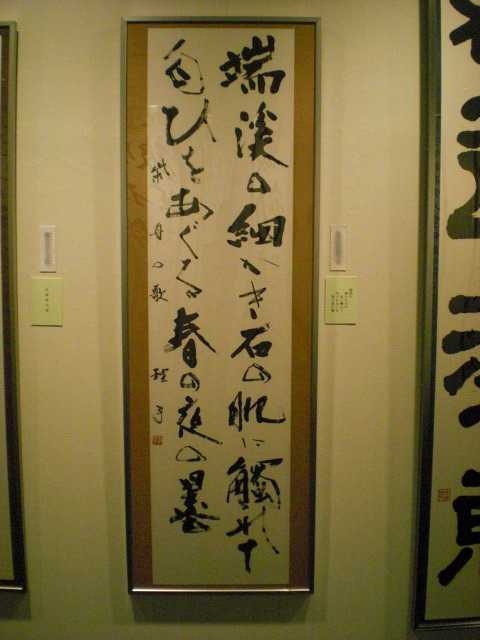
たんけいのこまかきいしのはだ(え?)(に)ふれて、におひをあぐるはるのよのすみAlways tough for me to figure these out, but here's a shot:
tankei no komakaki ishi no hada ni furete
nioi o aguru—haru no yo no sumi
端渓の 細かき石の肌(え?)(に)触れてThere seem to be (naturally!) a few ways to read this, depending on what you consider as modifying what, but the sense seems to be that when the poet touches a little suzuri from Tankei, it gives off the light fragrance of sumi ink on a spring night. Sensei told Cさん that Tankei Prefecture, in China (I think), is famous for its inkstones (suzuri, 硯). "Hada ni furete" seems to mean when skin touches stone; whether "hada" is skin or another surface isn't quite clear, but the idea of "coming into contact with" seems appropriate.
匂いをあぐる—
春の夜の墨
Update: I should have mentioned that Cさん's poem is by 尾上柴舟 ONOE Saishuu (1876–1957), a poet and calligrapher who seems to have been involved in "magazine wars" with another school of poetry, passions of human nature vs. ordinary experience (such as sniffing one's suzuri). It would be interesting to, one of these days, attempt to diagram all these schools, journals, literary circles, and teaching relationships. Just about every poet whose work we've written taught, was taught by, or was a colleague of someone else we've written. Maybe I'll try it with genealogy software. :-D
大蛍ゆらりゆらりと通りけり
oobotaru yurariyurari to toorikeri
fat firefly, swooping and swaying, passing by
"Yurariyurari" is one of those concepts that one has to ask a native speaker to explain, and the explanation of which almost certainly will involve mime. It seems to mean dipping and swaying while moving forward, like a hand conducting some slow piece of music, or like a slalom (but with downward movement), or what would happen if you were piloting a plane and moved the controller rhythmically left and right. A site that explicates the poem says this:
大きな源氏蛍が、暗やみの中を大きな弧を描きながらゆらりゆらりと飛んでゆく。〔季語〕蛍
ooki na genji hotaru ga, kurayami no naka o ooki na ko o egakinagara yurariyurari to tondeyuku. (kigo) hotaru
A large firefly flies through the darkness, describing a large arc.
Several questions arise from this: "genji na hotaru"? What can this mean? Genji seems to refer not only to the famous tale, but also to the Minamoto shogunate, but that doesn't seem relevant here. But there's no particle between "genji" and "hotaru", so—?
"Describing an arc" is the phrase we'd use in English to talk about this, but the phrase "弧を描く" catches me because, as is true of so many other things, it seems to have a history that's more phonetic than graphic. I always have to check myself on these phonetic questions, because the response tends to be that there's no particular history there; but it's difficult to ignore that "egaku" combines "e" and "kaku"—writing a picture. There are several kanji for "kaku", I think—writing, composing, painting—but 描く does have the additional sense of 絵. Or not. I never know! Like this cat and her feather toy, I'm always chasing things that can't be caught.
"Tondeyuku" is helpful, because I've wondered about the meaningful difference between "iku" and "yuku", both having the sense of "to go". "Yuku" seems always to imply progression, as in not just going from place to place but the act of going. Here we have 飛ぶ + 行く, "tondeyuku", a progressive flying, with the additional image of reeling back and forth.
And then there's the "keri" ending, concerning which I'm about to throw up my hands. Shirane先生's book on classical grammar discusses き and けり as controversial and devotes about four pages to the distinction, with at least four totally distinct meanings for けり alone. "In contrast to the auxiliary verb ki, which indicates a past that is already distant from and separate from the present, keri begins with the present and looks back retrospectively at the past." So, that clears it all up. Another meaning is "exclamatory recognition". *sigh*
But the site goes on to say this: オノマトペ(擬音・擬態語)の達者として知られる俳人小林一茶は小動物をこよなく愛し、昆虫の中では蛍を詠んだ句も蝶(ちょう)に次いで多い。蠅(はえ)が手足を擦る所作を助命嘆願に見立てた句など、思い入れたっぷりだ Issa liked onomatopoiea (imitative/mimetic sounds) and insects / small animals (fireflies, butterflies) and wrote quite a few poems about them, especially with the theme of flies rubbings their "hands" together, as if asking for leniency (vs being swatted).
I'd like to look at other Issa poems about fireflies, but I have a cat that requires attention, so—so much for that.
Anyway, I was looking up the kanji for zouri—草履, "grass shoes"—and Denshi Jisho randomly mentioned that if you add mushi 虫 ("bug") to zouri you get a paramecium. Why on earth is a paramecium a zouri-bug? Cさん suggests it's about the shape, but I doubt that, as zouri are almost rectangular. The need for further research is clearly indicated.
古池に草履沈みて
霙かな
furu ike ni zouri shizumite
mizore kana
a sandal sinking in the old lake—sleet!
—Buson
(Texts tend to translate "哉" as an exclamation point, expressing wonderment, so that's what I've done here. To me, though, it never seems quite appropriate. It's hard to see Buson getting so jazzed about a frozen sandal, and at any rate modern "なぁ" seems more like "hmm".)