Monday, February 3, 2020

鬼は外! 福は内! (Setsubun!)


Doing my daily Japanese reading a few minutes ago, I came across an example of  「鬼は外!」 (Demons, out!) Some Helpful Soul points out that this is said on Setsubun (節分), season-division (into Spring), which, as it happens, is today. Time to banish demons and bring in luck! I need to hit the 食料品店 (グロ・スト) , anyway, so maybe I can pick up some soybeans to wing out the door. For a demon mask, luckily, I can just use my face.  >:-D
The custom of mamemaki first appeared in the Muromachi period. It is usually performed by the toshiotoko (年男) of the household (the male who was born on the corresponding animal year on the Chinese zodiac), or else the male head of the household. Roasted soybeans (called "fortune beans" [福豆, fuku mame]) are thrown either out the door or at a member of the family wearing an Oni (demon or ogre) mask, while the people say "Demons out! Luck in!" (鬼は外! 福は内!, Oni wa soto! Fuku wa uchi!) and slam the door. This is still common practice in households but many people will attend a shrine or temple's spring festival where this is done. The beans are thought to symbolically purify the home by driving away the evil spirits that bring misfortune and bad health with them. Then, as part of bringing luck in, it is customary to eat roasted soybeans, one for each year of one's life, and in some areas, one for each year of one's life plus one more for bringing good luck for the year to come. (Wikipedia)
I could use some demon-banishing and some luck, so today is the today for me, フォ・ショ.

Sunday, January 19, 2020

「お手数をお掛けして。。。」

(数 + 掛—Is there a sense here of adding to one's burdens/troubles? Hanging more troubles or tasks upon one? Jisho gives as a meaning of 手数 number of moves.)

Thursday, January 2, 2020

Writing English as 句.


Since we started studying writing haiku and tanka, lo these many years ago, my in-English semi-cursive handwriting has changed a bit; now I tend to connect letters downward, as if writing a tanzaku, while writing along a baseline to the right. (Maybe I've been thinking of it because I've been studying Arabic along with my Japanese reading, and Arabic connects letters quite differently, right to left, with meaningful parts below the baseline, and also has a rich calligraphic tradition.)

This afternoon I was on a boring phone call and started doodling the word transfer as if it were tanka (right). Many of the shapes are similar, e.g.,

T, 大, 木, 下, 七, 十, tsuchi-hen
R, や, 民, 尸, maybe sousho u-kanmuri 宀
A, sousho 林
N, ん, れ
S, 乙, 弓, し, numerous hentaigana
F/E, 乍,れ, 馬, maybe hentaigana の from 能
&c.

Silly, but kinda fun, and probably decent practice for connecting in elegant and/or interesting ways.

Tuesday, December 31, 2019

書き初め!

It's that time of year again—kakizome, first writing! The tradition, I gather, is to write happy thoughts for the new year with ink ground from the first draw from the well. A faucet will have to do—or maybe an unopened bottle of water. Hmm. (I think the thing is to write on Jan 2, so I could make a water run, to do it right.) Then burn the writings, on the 15th or so; better apply for a bonfire permit. I've read that the festival in which 書初め are burned is 左義長, Sagichou, the major shrine being Tsurugaoka-Hachimanguu, in Kamakura.
I wonder what might be the history of 左義長—any connection with the ancient government post of Minister of the Left? Or with the (now defunct) 1000-year-old ginkgo tree to the left of the temple stairs? The ja.wikipedia page is helpful, but it's tough reading for me....

Thursday, December 26, 2019

Dancing the 単語.

chatting at the store
somehow turns to business cards
「名刺」 count: 1

Tuesday, December 17, 2019

嘗て。

かつて。That's a new one. I've been encountering lots and lots of vocab that's new to me, but you'd think, in studying 短歌 (tanka) and 昔話 (folk tales), I'd have some across かつて somewhere. Once, used to be. (The classic start to a folk tale is 昔々, mukashi mukashi, equivalent to once upon a time—different sense of once? I do see examples of it as interchangeable with 昔. かつては、ここに教会があった。There used to be a church here.) Apparently, with a negative verb it can refer to something that hasn't happened yet, never has, I guess as もう can. かつて僕のだった、これ。これはかつて僕のじゃない? I have seen (negative) かつてない; Weblio.jp says for katsute nai, 「今までにない、過去に前例がない、といった意味の言い回し」—not up to now, not so far, no such precedent.

From 嘗て. Henshall doesn't list the kanji; the MS IME does substitute 嘗 for かつ in "かつて". Variant kanji is 甞. katsute 嘗て, nameru, kokoromiru... なめる and licking? To be followed up on, sometime when it's not (already) almost 7am...

Wednesday, December 11, 2019

会社で働くのは、frei macht か。

Hmm. Turns out アルバイト (arubaito, part-time work, from German Arbeit) isn't the only Japanese loan-word from German. Must follow up (when not still working on work at 3am).

Category:Japanese_terms_borrowed_from_German

Monday, December 2, 2019

Who left the light in (the branch)?

Someone on a message board has just pointed out, in an example sentence, a difference in meaning between the intransitive る and transitive す verb forms. Recalls a tanzaku (短冊) haiku I've had around the house for years:

一枝にhito eda niin one branch
光のこして hikari nokoshitelight remains
里の春sato no haruspring in the village
(back home)

The straightforward reading is that (sun)light just remains, but shifting to transitive—what?—implies a subject, someone who is leaving the light there? Certainly, a new way of looking at the poem.

Proverb:

虎は死して皮を留め
人は死して名を残す

tora ha shishite, kawa o todome;
hito ha shishite, na o nokosu

a tiger dies and leaves its skin;
a person dies and leaves their name (o nokosu)

The person (人) leaves (残す) the object (名を).

を vs が: "結果だけが残る!!!"
—only the results/consequences remain (ga nokoru)!

That light, in that one branch—has someone left it there?

才, 材, オ.

才, 材. オ. 歳.

才能, 才気, 才女, 才子, 才人, 才覚, 才力. 財 (which Henshall says a bit dubiously is composed of both shells/money 貝 and, ideographically and phonetically, a dam 才).

矛, halberd heads? dagger-axes? Talent meets age. Maybe in this case of age it's just a tl;dw ("too long; didn't write") form of 歳, with the cross-stroke recalling 戈 (and maybe 矛). Or is there a connection between age/experience and increasing aptitude/capability?
Of course, similarity in structure, appearance, feel, or sound doesn't necessarily mean any type of thing.

(The image is of spears/pikes 矛, from the Shimane Museum of Ancient Izumo 島根県・立古代・出雲・歴史・博物館. 才, 弋, and 矛 all seem to involve weaponry, be it spears, halberds, or bows.)

才弾ける?  (a snapping string? 琴を弾く? 引く? 弾ける? 弾傷?)

Will have to suss out all this.

(Learning a lot from Duolingo and spending a lot of time asking questions on the message boards there. Doesn't hold a candle to studying with 先生, but better to stay engaged than not to!)

Monday, November 25, 2019

死亡 、希望。

Nothing but drafts in ages! I keep reading about various things but being pulled away by something else before hitting publish. One of these years.

Have been having a great time with Duolingo; a thing I enjoy is learning/practicing a language in another language, to help me escape English-language patterns of thinking. (I did for years largely live in French, so those patterns also are ingrained.) Duolingo mainly teaches from English but offers bunches of other language–first content, so there's much fun to be had, and it's perfect for doing some exercises in down time or in anxious time, when a person needs something to fidget with. Or in bed, via iPad.

Anyway, I jump in this morning to leave myself a note to look into 望. I have on News 24, trying to pick up whatever I can, and I've noticed shibou (死亡, decease, demise) and kibou (希望, wish, hope). 

亡 recalls 亡くなる/無くなる (to die / to be lost, to "become nothing", both of which are funnily appropriate because く looks like the > sign used in computer coding that means piping-to or resulting-in.) 望 is のぞ・む、のぞ・ましい、のず・み, wish or desire, 望み通り, just as one would wish. Recalls Hamlet, ruminating on death by suicide as "a consummation devoutly to be wished". 

I also am seeing in 望 rarity, the full moon, or the middle of the (eighth lunar) month—Shakespeare again, the Ides (of March, in Caesar's case)—bougetsu, surname Mochi-zuki (月—why mochi?). 望外 bougai, unexpected (外, outside of). 望遠鏡 bouenkyou, a telescope (the 望-distant-mirror).

No time to investigate now, so I'll have to take a rain-check on the full moon, but...note to self! 

Tuesday, July 23, 2019

七転八起! (or, never say die!)

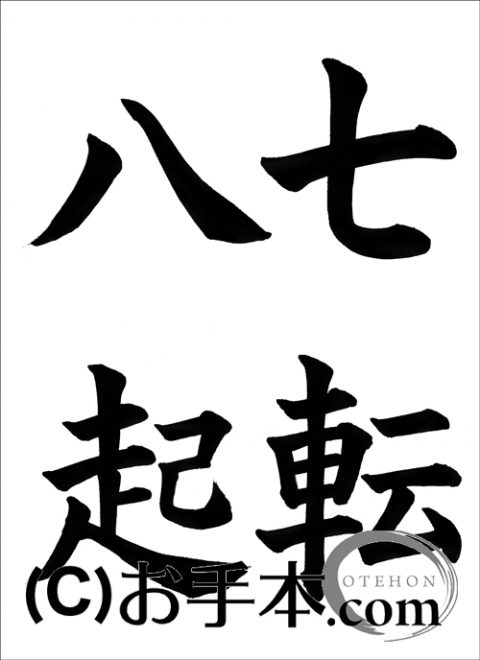
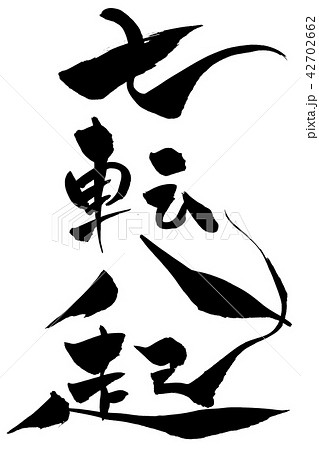
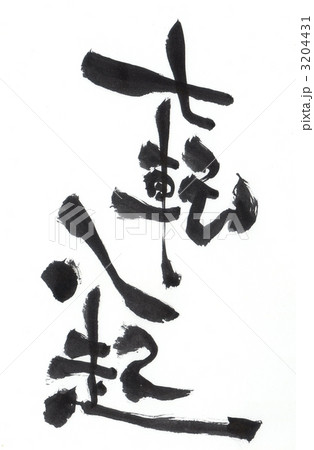
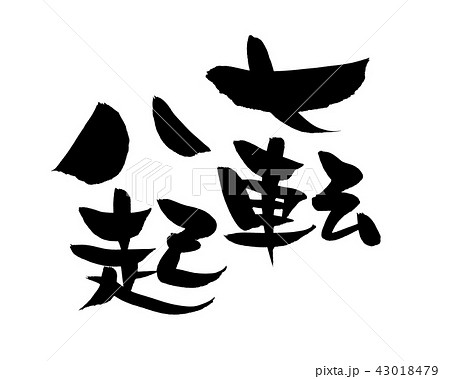
I'm thinking of writing 七転八起 (shichiten hakki)—”Fall down seven times; get up eight.” This often is heard/seen in English, but it's a long time since I've put brush to paper, so why not? (No, it doesn't exactly make sense, but, really, what is sense, anyway?)

A thing I like a lot about learning kanji is the intersections of their meanings. In this case, we have 起, which I first learned as okiru/okosu, in the sense of awakening / getting out of bed or "knocking someone up"—i.e., awakening someone. Here, it's literally to rise after falling.

I've done a lot of falling down for a long time now and am in the process of getting up, so it seems appropriate. Shichi and hachi both are relatively simple—and hachi, of course, is of particular significance to me—so they have to be really right.

Examples below—thoughts? #八Rising

(Note: Work in progress; images are coded to link through to the source, but I'll have to fix. I'll look through them all after a nap; better just to post what I have, as I have dozens of drafts never finished!)

1. Standard kaisho, 2x2 format, right to left. 2. Somewhere between kaisho and gyousho, single column, top to bottom. The sweeping righthand stroke of 八 cuts off the 已 of 起; I've had the same issue with 八 when writing it 2x2. Love the hooks (そりはね, sorihane)!
3. 4.

5. 6.
7. 8.
9. 10.

Sunday, March 11, 2018

Iro-wha?!

Practicing examples of 「浅き夢見じ営もせず」 from The Book (書道字典, Shodou Jiten) and かな精習 (Kana Seishuu). Just on pages of a telephone book, but I have a thought that I'll hang them along the loft wall upstairs and then maybe swap out the characters whenever I'm able to write them better. The trouble is that I'm attracted to so many styles and would like the series to be coherent, at least a little....

I'm thinking of breaking them up as

浅き (asaki)
夢 (yume)
見じ (miji, mishi)
営も (ei mo, wehi mo, yoi mo)
せず (sezu, sesu)
I've had a project of this kind in mind for years and have practiced variations with fude-pen, and ultimately I'd like to add the other parts of the Iroha throughout the house, but—especially with a text so important—I don't trust my aesthetic judgment. 頑張りましょうね。

I haven't blogged in a while—or at least hit "post" on anything I've been thinking of—but I still exist. In some form. :-D


木蔭

Wednesday, August 16, 2017

Punctuation!!!

A few minutes ago I was typing 「おめでとうございます」, and the Windows Japanese IME asked me which of these I meant:
おめでとうございます!
おめでとうございます!!
or
おめでとうございます!!!
I don't know whether it's assessing my enthusiasm or my developmental age. Maybe the next generation of emoji will ask you to input smile intensity, on a scale or by degree.

Sunday, August 13, 2017

Getting lost in the park.

Just had a fun moment while studying in the park with some Japanese materials—Tobira, kanji quiz apps, NHK, Akutagawa's short story "鼻". (The JLPT registration period, Aug–Sep, always inspires.)

Just as my quiz app served me "迷"—"to lose one's way"—a little girl toddled up to me in the grass and waved hello. I said, "Hey, there. 道に迷っちゃったんですか?" There wasn't a 道 to have lost, but I think she got the idea.

The kanji 迷 (MEI, mayo・u) is a favorite of mine, for its mnemonic. It's the movement/road radical (SHIN'NYOU, 之繞), then "rice" (米), which per Henshall may be phonetic or derive from "unfinished" (未), suggesting indecisiveness. As 米 also stands for the US, though, to me this is an American in the older streets of Japan: utterly lost. Perplexed. Like rice in the road. He MEI never figure it out. (笑)

To quote the JLPT, 「いい天気ですから、散歩しましょう。」 
でも、道に迷わないように気を付けようね。

Tuesday, February 7, 2017

Snakes in the gate! Or insects?

I'm trying to figure out the kanji on the bottom of a mug I inherited from some person terminated by my employer several years ago—a pretty mug, wave-patterned red with a gold dragon on each side, facing one another opposite the handle, with an inset tea infuser and a lid/stand and saucer. (I'm sorry for the person who left it, but I'm happy to have it. It's pleasant to drink coffee from dragons.)

The logo on the bottom is an encircled dotted double mountain, with the letters MTPI, and below that two kanji. The second of the kanji is 通 つう tsuu; that's easy. The first should be easy—it's just 門 with 虫 inside, 14畫—but I can't find any trace of it, in either Japanese or Chinese kanji resources. You'd think it would show up as a variant, at least, or a simplification of something older.

Fun: The older (pre-simplified) form of 虫 apparently is 蟲—just the same kanji, but three times—insect, insect, insect!!! Jisho.org defines it as an insect but also as "temper"; there must be more of a story behind that. Henshall says little but that the basic kanji represents a partially coiled snake and that anciently snakes and insects were not differentiated; I find the latter part hard to believe. If one or the other were in your bed, you'd know the difference.

The Book includes the kanji 門+虫—examples of it as written by eight calligraphers—but doesn't give a reading for it. (I'm sure it's indexed by sound, but that's not helpful.) My suspicion, given that 虫 can suggest a serpent or worm, is that the kanji mean something like "dragon pattern". Jisho gives variants for 竜, but nothing seems likely. Mysterious....

Friday, January 27, 2017

A minor but joyful occurrence.

So, I'm moving some objects, and a label on a thing I overturn says MADE IN KOREA.
Nothing unusual about that, but
looking at the word Korea, I read it as 韓国.

(My reading the English word Korea as かんこく is exciting and worth wondering about, for me. Also, What exactly that appellation means and to whom....)

Saturday, November 5, 2016

A blazing autumn for us all.

Thinking about forms of prostration, in the last post, gave me the fun image of fully "prostrating" (in the Catholic sense) oneself in a 4.5-mat chashitsu. It would take up most of the room, and one's papers would fall from one's obi into the inset stove.... I feel a poem coming on!
四畳半
炉に懐紙落ち
暑い秋

yojouhan
ro ni kaishi ochi
atsui aki

face-down on the mats
papers slip into the fire—
a very warm autumn!

...or something like that. I was trying to do something more tankaësque, with 炎秋になり, or at least a good 哉, and to play with a too-hot fire vs the cold of an autumn/winter tearoom, but maybe later. There must be set phrases in classical poetry to describe warm/mild winters. Maybe a specific plant or bird. I'll have to check some kigo dictionaries.

And I'm not sure what I did with 落 was legal. It feels right, though—continuous—and fits the meter. I think I'd prefer 秋暑い. Hmm.

真礼 and 土下座—bowing or prostrating oneself?

In lessons in chanoyu 茶の湯, Tea ceremony, we've done three kinds of bow (rei 礼), aligning with the shin-gyou-sou hierarchy of formality:
  • the shin (真, "true"?) bow, the most formal, for entering and exiting the space, etc
  • the gyou (行) "moving" bow, about halfway down, as for passing tea, or 道具 Tea implements for perusal, to the next guest
  • the sou (草) "grass" bow, just touching the mat and nodding as an acknowledgment (eg, while passing food), especially when you need things to keep moving

I've only heard these terms, so I can't be sure; the bow on entering and leaving class itself may in fact be a 師礼 (shirei), a bow to the teacher, though how that would differ from shin, I'm not sure.

I gather the shin-gyou-sou paradigm applies to other contexts in Japanese culture; certainly it's there in calligraphy (書道)—kaisho 楷書 as, though maybe not most formal, standard; 行書 as the more fluid "cursive script"; 草書 as writing so stylized and/or introspective as often to be illegible.

Recently I've learned of the phrase dogeza 土下座, which is literally down-ground-position but can be translated as "prostrating oneself"; in practice it seems similar to the shin 真 bow. How are these different? Are they?

In Tea class, the shin bow is done from seiza (kneeling), hands fully down on the mat at chest level, fingers and thumb together, elbows out, nose almost to the mat. It's measured and respectful in Tea, though I guess not always in other contexts:

To me, the English phrase to prostrate oneself means something else entirely: It's a body position derived from Catholicism, expressing total subjugation, repentance, humility. Body face-down on the floor, feet together, arms either at the sides or out at a right angle, to form a cross:

But a search turns up far more instances of 土下座 as prostration, so I must just be thinking of it from my own background.

Sunday, October 23, 2016

愚 is what makes it tape instead of paper.

So, I wanted to write iki (息, breath/breathing) for my desk at work, as a reminder. (I can be kinda intense; I forget to breathe.) I was paging through The Book for examples—kokoro radical, ten strokes—and happened onto this bit of wonderfulness.

The writer is Zangzhen, apparently considered one of the two greatest calligraphers of the Tang dynasty (7th to 10th centuries) and particularly good at cursive, fluid writing. ("The crazy Zhang and the drunk Su"—just my kind of crowd.)

I love looking through these examples by the old masters; I wouldn't say you can feel the person who was writing, but you can feel the energy with which the writing was done. Some writings are Correct and authoritative; some are somber or subdued; many are playful or energetic; some are made to look like something else. There's an expressiveness to kanji that English, love it though I do, doesn't afford.

The kanji in question isn't iki; it's one I found along the way. Not surprisingly, it's 愚 (gu), foolishness—in this expression, a foolishness which literally surpasseth the margins. I enjoy its lightness, indifference, dancingness. I loved writing yama in gyousho for the same reason: It always seemed to be running. (行、走)

I'd better write 愚, too, for around the house. Or maybe have it tattooed onto my face.

Sunday, August 14, 2016

Curricula.

It's difficult to develop a curriculum for the JLPT. Should I focus on grammar books? Vocab? Read newspapers? Read manga? Watch and transcribe videos? Focus on kanji by school grade? By frequency? By radical? All of the above? I have two sets of kanji flashcards (in addition to those I made for myself, which omit English entirely), but each has the character and then maybe ten Japanese and Chinese readings. So, do I test myself on all readings, meanings, verb forms, and compounds of every kanji? I'd never get anywhere, and anyway recognizing them in a text isn't the same as producing them with a pen, which is far from producing them with a brush, and typing them in a US-based IME is different again. Right now, I'm thinking I'll continue with textbooks—though Genki does tend to focus on the plight of the student abroad, which means a lot of vocab I won't need for newspapers and novels, and Tobira tends to highlight cultural elements that I want to learn about but that won't necessarily help me on the JLPT. It seems like I need grammar and functional vocab, with kanji studies as dictated by the reading, all done with a notebook and pen at hand to help with writing and memorization. I've tutored in French and English, so curriculum is dear to my heart, but Japanese does pose some unique problems, especially when the learning is directed toward a very specific but undefined goal....

Thursday, August 11, 2016

Transcribing passenger records, Japan to Brazil, 1936

I like a challenge, so ひまのとき, I transcribe old records for genealogists / family historians / historians who may be interested. I take on the records that no one else wants—18th-century Italian baptisms, 16th-century French that's impossible to read, passenger lists in Japanese. Puzzling out the geographical locations and family names is what I call fun, and it's good practice in reading and kanji. Some of the writing seems surprisingly calligraphic.


It's that time again....

JLPT registration begins August 29! I could use something to focus on right now, so I'm thinking maybe try for the N4—I managed to succeed in former 4 years ago and am doing very well on practice tests—or, if I'm ambitious, N3. Reading through Tobira. Really, ひさしぶりなので, I should head back to the first Genki; I need the review. I'm surprised how quickly it's coming back to me, though; with some things I'm reading, it takes me longer to think of the word in English than to understand it in Japanese. Good sign. Closely following the Emperor's hints at abdicating, or at being permitted to do so. Ramifications are major!

Sunday, February 21, 2016

Inspiration.

Looks like Rikumo has been around for a while, in Calowhill, and I just haven't known about it. Well, now I do! So it counts as new. Right?

Anyway, seeing Rikumo has happened at an opportune time for inspiration. I haven't pursued any of my Japanese studies in years, at this point, for various life reasons, but very recently I've been missing it intensely and have wanted to start again. I even have had the same fantasy I have every year, to take the JLPT, at whatever level seems feasible. My apartment has a decent layout for a chashitsu, even with machiai and mizuya.... Hmm....

What I really miss is studying the language, especially poetry and shodou. I have blog drafts from 2013 and 2014 about verb forms and tanka. Sometimes I practice shodou on cheap paper, but I always feel it's just not good enough; as with the language, I can imitate, but never seem to get the nuances. Some studies really do require a highly skilled teacher. But, however much remedial practice it may need, my brush shall rise again!

NEWS FLASH! Rikumo.

On my way home from brunch today, I passed a new store (Walnut between 12th and 13th, south side) called Rikumo. I had time only to press my face against the glass, and make a note to visit later, but it looks like a world of wonders—including actual dougu! Even in the window, chasen, chashaku, and what looked like a bowl for koicha, and in the distance I could see tetsubin. Who thought we'd have a store in Center City that sold tetsubin? I don't know how long it's-a-been there (はは), but I'll be thrilled if it can find a steady customer base at that location and will continue with events &c. (The online presence looks great, too, though of course it's better to see things in person, especially when they're ceremonially meaningful.) I'd love to hear what chanoyu fans think of what's available, especially the matcha (Ippodo, Kannoshiro; at the Ippodo site you can even search by Tea discipline). I didn't see tatami or shodou supplies, but hey. 仕方が無いね. We'll always have the good people at Awesome Art Supply.

Tuesday, December 3, 2013

つくばensis? (Drugs and mountains).

こんばんは! For months now, I've been sidelined from most of my Japanese activities—apart from transcribing pre-WWII passenger lists from Japan to Brazil, about which there is much to say and wonder about—but recently something interesting popped up that ties together the threads of illness and Japan.

I'm supposed to take a medication whose active ingredient is produced by the bacterium Streptomyces tsukubaensis, and—given that the species name combines the Latin "-ensis" (from) and "tsukuba-", I figured there must be a story there.

Microörganisms often are named for either their discoverer or their place of origin, so I wondered what "tsukuba-" might mean—any chance that it might relate to the tsukubai (蹲踞, or just 蹲), the "stooping" water basin outside the chashitsu at which Tea guests purify themselves before entering? Phonemes in Japanese are notoriously misleading, so I doubted it, but it was worth looking into.

It turns out that the bacterium is named for its place of origin, the area around Mount Tsukuba (筑波山), a double-peaked mountain in Ibaraki Prefecture, just under 40 miles north of Toukyou. There are some interesting legends about the peaks: It seems an unspecified god descended from the heavens and asked around for shelter; whereas Mt Fuji was too proud to offer, Mt Tsukuba did, and this is why Mt Fuji is frigid and Mt Tsukuba is lush with vegetation. Also said to be the burial places of the great deities Izanagi and Izanami. Lofty origins for a useful bacterium! So, we have the stinginess of Mt Fuji to thank for all the medicinal plants founts in Tsukuba.

In "tsukubai", the kanji are

  • 蹲, tsukubai, used for the basin itself—whose radicals include, funnily enough, a foot and o-sake (rice wine)
  • 踞, KYO / uzuku.maru, to crouch or kneel, with the same (but perhaps more understandable) foot radical
Funnily enough, apparently in a sumou context, 蹲踞 becomes "sonkyo", a formal "crouch" or bow to one's opponent before the start of a match. (Similarly, in Tea class we begin with aisatsu, a very formal [forehead almost to the ground!] bow to the teacher.)

Mount Tsukuba's kanji are

  • 筑, CHIKU / tsuku, which seems to refer to an ancient musical instrument (probably/presumably a drum); note that the on-yomi CHIKU matches the crown radical of bamboo (take/CHIKU)
  • 波, HA/nami, a wave, which in a secondary position in a two-kanji word would read as "BA".
All of which is to say, there's no particular connection that I can see between 筑波ensis and 蹲踞. 当て字かもしれませんね。

As a side note: I find that 波 (nami) also can invoke Poland. This is something I've been thinking about for a while with the passenger lists; I knew that the US is often represented as 米 (kome/BEI), rice; China as 中 (naka/CHUU), the middle;, and Japan as 日 (nichi), the Sun; 英 (EI) is England but also is read はなぶさ hanabusa, the calices or fringey outer parts of a flower. (If memory serves, the tassels that close my haori in the front also are "fusa".) But it seems Brazil (ブラジル) is 伯 (HAKU/etc.), which seems to have old political meanings. France is 仏 and variant 佛—the Buddha, or the dead. Spain is 西 (SAI/nishi, west). Mexico is sumi ink (墨). Etc. Clearly there is more to be learned about this.

Thursday, October 24, 2013

Mysterious kana.

Hello! I've been weirdly sick for the past few months and have left the house pretty much not at all—so I've been reading and practicing 書 at home. I've also been transcribing Japanese passenger lists from the 1930s for a database for people researching family history. Challenging work—many jinmeiyou kanji that I don't know and have to track down—but a great way to explore, and the lists are fascinating snapshots of families migrating at the time.

Also interesting to explore the typography; Cさん and I have in lessons written most hira- and hentaigana, but there are a few in these printed lists that I can't recognize. For example: A list I'm working on now contains a two-character name, written

in kana, that's [something]よ. The [something] is a three-stroke character, presumably hiragana, that's almost like a dotted こ: dot in the upper-right corner, then a stroke below that and to the left that runs northwest to southeast, and then a stroke below that that curves from the left and along the bottom and looks like it may derive from the shinnyuu "movement" radical. The bearer of the name is someone's imouto, so it must be a female name, but no -よ name I know makes sense here.

The batch is "due" today—rather, it was due yesterday—so if I can't figure it out I'll have to guess. Modern problems!

Update: A kind soul on a forum tells me that it's と, derived from tomaru (止・まる). I'll look for it in Kana Seishuu.

Wednesday, July 31, 2013

こんばんは! I haven't been able to do much of anything in ages, but I wanted to post this link (http://360gigapixels.com/tokyo-tower-panorama-photo/) to an amazing interactive 360-degree panoramic of Tōkyo that's so incredibly high-res that you can pretty much see every brick in the city, for miles around. Neat! I can't wait to visit (someday, if I can ever again achieve any kind of stability in my life).

Tuesday, April 30, 2013

New summer poem: Mizuho in ruins.

The winds of change have been blowing at gale force, so I haven't been able to attend Tea class or my Japanese lessons, or even Sho lessons, for quite a while. But we did get to go to see 習字の先生 the other day, and I got to choose a new poem for summer! (Technically, by the old calendar, summer starts next week, but I'm sure I'll be working on this one for quite a while.) It's by 太田水穂 OOTA Mizuho (1876–1955).

Mizuho-san's biography seems not overwhelmingly remarkable for a poet—he studied the classics on his own, became a schoolteacher, and established a literary salon and a journal—but the temple where he's buried is fascinating: 松岡山東慶寺 Shoukozan Toukei-ji, informally known as 縁切り寺 Enkiridera or 駆け込み寺 Kakekomidera, the "divorce temple". It's a 13th-century Zen Buddhist site in Kamakura that for about 600 years was a refuge for women mistreated by their husband. Apparently, the rule was that if you stayed there for three years you could divorce your husband—and thousands of women did so. Men weren't even allowed in before administrative changes in 1902.

What really strikes me about this temple is the character 尼. The temple used to be a part of a five-temple complex called (very literally) 尼五山 Ama-go-zan, "the five mountains of nuns", "ama" being a nun. I know almost no Japanese slang, but apparently 尼 has many of the same derogatory meanings as "bitch" and similar words in English. Are the meanings connected—does the pejorative sense of an improperly behaving woman derive from the idea of nuns as women fleeing abusive husbands? Or maybe from sexual abstinence? Or something else?

My Random House dictionary lists only "nun"—not very helpful. (In any language, words for larger, or culturally specific, concepts almost never translate directly.) Maybe an etymological dictionary would shed more light. Henshall says it originally meant a person too badly injured to walk and may have evolved phonetically or through a sense of dedication. (I suppose it's possible that at one time there was a sense of women who cared for wounded soldiers; at least here in the West, nuns and nursing often go together.)

Anyway, I haven't been able to find Mizuho-san's poem online anywhere, in English or Japanese, so here it is:

亡び行くもののすがたか夏の日の光に荒れて大き城址
horobiyuku mono no sugata ka—natsu no hi no hikari ni arete ooki shiroato
castle falling into ruin in the summer light—a sign of coming decline?
Not a very elegant translation on my part, but I think (mainly per 先生's explanation) that's the general sense.

Some interesting things in that poem:

  • "yuku" vs "iku". I've always wondered about this. Everywhere I turn, people say they're interchangeable, but "iku" seems to be used as a suffix in modern grammar (meaning a situation that is progressing from now, as opposed to "kuru") and 先生 says "yuku" is more appropriate here. Just for fun, I proposed "horobikuru", which I guess would mean something like "having decayed up to this point", but no dice!
  • "horobiku". There are (at least) two kanji for this that have the same sound and meaning: 亡ぶ, 滅ぶ. Both are jouyou, so it's not that one is antiquated; someone thought they both deserved to be taught in school. Per Jisho.org, 亡 is taught in sixth grade and 滅 in junior high. How do they differ? Must check Goo.
  • "ato". 跡, 址, 痕, and 迹 all are share the kun'yomi reading of "ato", and all mean something that's left behind—ruins, traces, even a scar. All except 址 (which is no longer in use) are taught in junior high. They seem to be linked by sound to 後, which has senses of "behind" and "after"—後々 atoato, the distant future; 跡形 / 後方 atogata atokata / atogata, traces/evidence; "atotori" and various versions of "atotsugi" for heirs and successors. 後釜 "atogama", a second (succeeding) wife (using the same character for "kama" in chanoyu, a kettle, to mean the wife—!). Strangely enough, the "ato" used in the poem is none of these; it's close to 址 (hand + stopping) but has a foot (足 ashi) rather than a hand. (跡 has ashi-hen, too, but with 亦 "again" instead of 止 "stop"). Feet going, feet stopping, and somehow it means ruins. Maybe something people stopped building; maybe something you trip on. More likely, neither.
Mizuho-san was from Nagano but later lived in Kamakura. I wonder whether he was referring to a specific castle and, if so, to which one.

Monday, March 18, 2013

More on suzuri from Tankei.

When I was trying to find out more about Tankei suzuri (and who wrote Cさん's poem), I found this interesting rendition from a blog based in Shitamachi:

The writer includes the following by way of explanation:

上記、句に出てくる「端渓(たんけい)」は硯の材料として有名な石の名前です。
中国広東省肇慶市に端渓という川があり、その両岸から産出されるのだとか。
きめ細かくしっとりとみずみずしいのが特徴なんだそうです。。。。
The "Tankei" that appears in the poem above is the name of a kind of stone that's famous for use in suzuri. It comes from the banks of a river called Tankei, near Zhaoqing, Canton (Guangdong), China. It's said to be known for its fine, soft, smooth grain.
Cさん e-mailed today that 先生 said the "hada" in question is more likely the surface of the suzuri (which now sounds like it may have the feel of skin), and that seems to work with the "ni" construction. Probably, then, too, would be better to read "komakai" as referring to the fineness of the grain, rather than to a small inkstone.

Midspring; fragrant suzuri.

Today in shuuji I managed an acceptable oseisho for the winter haiku I've been working on—
手で顔を撫づれば鼻の冷たさよ

te de kao o nadzureba
hana no tsumetasa yo

when i run my hands over my face—
how cold my nose is!

(Kyoshi)
So, it's time to choose a new poem, a haiku or a tanka. Sensei tells me that the season should be mid-spring, so I'll have to see what I can find.

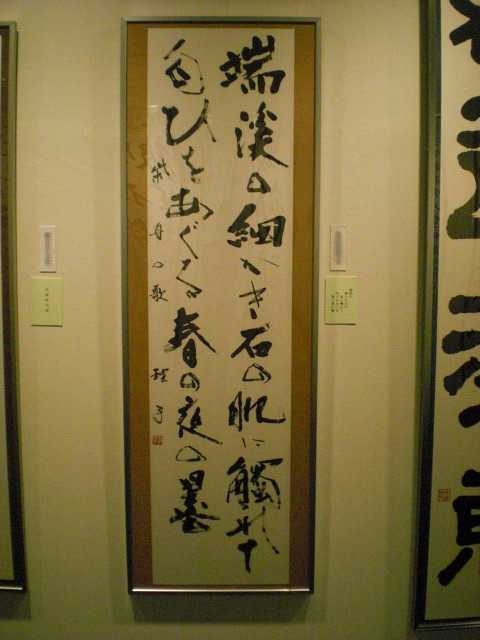
Cさん is working on an interesting one about suzuri:
たんけいのこまかきいしのはだ(え?)(に)ふれて、におひをあぐるはるのよのすみ
tankei no komakaki ishi no hada ni furete
nioi o aguru—haru no yo no sumi
Always tough for me to figure these out, but here's a shot:
端渓の 細かき石の肌(え?)(に)触れて
匂いをあぐる—
春の夜の墨
There seem to be (naturally!) a few ways to read this, depending on what you consider as modifying what, but the sense seems to be that when the poet touches a little suzuri from Tankei, it gives off the light fragrance of sumi ink on a spring night. Sensei told Cさん that Tankei Prefecture, in China (I think), is famous for its inkstones (suzuri, 硯). "Hada ni furete" seems to mean when skin touches stone; whether "hada" is skin or another surface isn't quite clear, but the idea of "coming into contact with" seems appropriate.

I'm even more uncertain about "hada ni furete" because the meter is off. I'd think this could be solved either by adding "e" ("hadae ni furete")—though that would result in an inappropriately seven-mora line, and I'm not sure "hada" and "hadae" are semantically equivalent—or, maybe, by dropping the particle "ni", if that's legal in this case, and saying just "hada furete". I'll have to find my pages of spring poems and look up the original.

Anyway, it's a nice image, no?

Update: I should have mentioned that Cさん's poem is by 尾上柴舟 ONOE Saishuu (1876–1957), a poet and calligrapher who seems to have been involved in "magazine wars" with another school of poetry, passions of human nature vs. ordinary experience (such as sniffing one's suzuri). It would be interesting to, one of these days, attempt to diagram all these schools, journals, literary circles, and teaching relationships. Just about every poet whose work we've written taught, was taught by, or was a colleague of someone else we've written. Maybe I'll try it with genealogy software. :-D