Tuesday, December 3, 2013

つくばensis? (Drugs and mountains).

こんばんは! For months now, I've been sidelined from most of my Japanese activities—apart from transcribing pre-WWII passenger lists from Japan to Brazil, about which there is much to say and wonder about—but recently something interesting popped up that ties together the threads of illness and Japan.

I'm supposed to take a medication whose active ingredient is produced by the bacterium Streptomyces tsukubaensis, and—given that the species name combines the Latin "-ensis" (from) and "tsukuba-", I figured there must be a story there.

Microörganisms often are named for either their discoverer or their place of origin, so I wondered what "tsukuba-" might mean—any chance that it might relate to the tsukubai (蹲踞, or just 蹲), the "stooping" water basin outside the chashitsu at which Tea guests purify themselves before entering? Phonemes in Japanese are notoriously misleading, so I doubted it, but it was worth looking into.

It turns out that the bacterium is named for its place of origin, the area around Mount Tsukuba (筑波山), a double-peaked mountain in Ibaraki Prefecture, just under 40 miles north of Toukyou. There are some interesting legends about the peaks: It seems an unspecified god descended from the heavens and asked around for shelter; whereas Mt Fuji was too proud to offer, Mt Tsukuba did, and this is why Mt Fuji is frigid and Mt Tsukuba is lush with vegetation. Also said to be the burial places of the great deities Izanagi and Izanami. Lofty origins for a useful bacterium! So, we have the stinginess of Mt Fuji to thank for all the medicinal plants founts in Tsukuba.

In "tsukubai", the kanji are

  • 蹲, tsukubai, used for the basin itself—whose radicals include, funnily enough, a foot and o-sake (rice wine)
  • 踞, KYO / uzuku.maru, to crouch or kneel, with the same (but perhaps more understandable) foot radical
Funnily enough, apparently in a sumou context, 蹲踞 becomes "sonkyo", a formal "crouch" or bow to one's opponent before the start of a match. (Similarly, in Tea class we begin with aisatsu, a very formal [forehead almost to the ground!] bow to the teacher.)

Mount Tsukuba's kanji are

  • 筑, CHIKU / tsuku, which seems to refer to an ancient musical instrument (probably/presumably a drum); note that the on-yomi CHIKU matches the crown radical of bamboo (take/CHIKU)
  • 波, HA/nami, a wave, which in a secondary position in a two-kanji word would read as "BA".
All of which is to say, there's no particular connection that I can see between 筑波ensis and 蹲踞. 当て字かもしれませんね。

As a side note: I find that 波 (nami) also can invoke Poland. This is something I've been thinking about for a while with the passenger lists; I knew that the US is often represented as 米 (kome/BEI), rice; China as 中 (naka/CHUU), the middle;, and Japan as 日 (nichi), the Sun; 英 (EI) is England but also is read はなぶさ hanabusa, the calices or fringey outer parts of a flower. (If memory serves, the tassels that close my haori in the front also are "fusa".) But it seems Brazil (ブラジル) is 伯 (HAKU/etc.), which seems to have old political meanings. France is 仏 and variant 佛—the Buddha, or the dead. Spain is 西 (SAI/nishi, west). Mexico is sumi ink (墨). Etc. Clearly there is more to be learned about this.

Thursday, October 24, 2013

Mysterious kana.

Hello! I've been weirdly sick for the past few months and have left the house pretty much not at all—so I've been reading and practicing 書 at home. I've also been transcribing Japanese passenger lists from the 1930s for a database for people researching family history. Challenging work—many jinmeiyou kanji that I don't know and have to track down—but a great way to explore, and the lists are fascinating snapshots of families migrating at the time.

Also interesting to explore the typography; Cさん and I have in lessons written most hira- and hentaigana, but there are a few in these printed lists that I can't recognize. For example: A list I'm working on now contains a two-character name, written

in kana, that's [something]よ. The [something] is a three-stroke character, presumably hiragana, that's almost like a dotted こ: dot in the upper-right corner, then a stroke below that and to the left that runs northwest to southeast, and then a stroke below that that curves from the left and along the bottom and looks like it may derive from the shinnyuu "movement" radical. The bearer of the name is someone's imouto, so it must be a female name, but no -よ name I know makes sense here.

The batch is "due" today—rather, it was due yesterday—so if I can't figure it out I'll have to guess. Modern problems!

Update: A kind soul on a forum tells me that it's と, derived from tomaru (止・まる). I'll look for it in Kana Seishuu.

Wednesday, July 31, 2013

こんばんは! I haven't been able to do much of anything in ages, but I wanted to post this link (http://360gigapixels.com/tokyo-tower-panorama-photo/) to an amazing interactive 360-degree panoramic of Tōkyo that's so incredibly high-res that you can pretty much see every brick in the city, for miles around. Neat! I can't wait to visit (someday, if I can ever again achieve any kind of stability in my life).

Tuesday, April 30, 2013

New summer poem: Mizuho in ruins.

The winds of change have been blowing at gale force, so I haven't been able to attend Tea class or my Japanese lessons, or even Sho lessons, for quite a while. But we did get to go to see 習字の先生 the other day, and I got to choose a new poem for summer! (Technically, by the old calendar, summer starts next week, but I'm sure I'll be working on this one for quite a while.) It's by 太田水穂 OOTA Mizuho (1876–1955).

Mizuho-san's biography seems not overwhelmingly remarkable for a poet—he studied the classics on his own, became a schoolteacher, and established a literary salon and a journal—but the temple where he's buried is fascinating: 松岡山東慶寺 Shoukozan Toukei-ji, informally known as 縁切り寺 Enkiridera or 駆け込み寺 Kakekomidera, the "divorce temple". It's a 13th-century Zen Buddhist site in Kamakura that for about 600 years was a refuge for women mistreated by their husband. Apparently, the rule was that if you stayed there for three years you could divorce your husband—and thousands of women did so. Men weren't even allowed in before administrative changes in 1902.

What really strikes me about this temple is the character 尼. The temple used to be a part of a five-temple complex called (very literally) 尼五山 Ama-go-zan, "the five mountains of nuns", "ama" being a nun. I know almost no Japanese slang, but apparently 尼 has many of the same derogatory meanings as "bitch" and similar words in English. Are the meanings connected—does the pejorative sense of an improperly behaving woman derive from the idea of nuns as women fleeing abusive husbands? Or maybe from sexual abstinence? Or something else?

My Random House dictionary lists only "nun"—not very helpful. (In any language, words for larger, or culturally specific, concepts almost never translate directly.) Maybe an etymological dictionary would shed more light. Henshall says it originally meant a person too badly injured to walk and may have evolved phonetically or through a sense of dedication. (I suppose it's possible that at one time there was a sense of women who cared for wounded soldiers; at least here in the West, nuns and nursing often go together.)

Anyway, I haven't been able to find Mizuho-san's poem online anywhere, in English or Japanese, so here it is:

亡び行くもののすがたか夏の日の光に荒れて大き城址
horobiyuku mono no sugata ka—natsu no hi no hikari ni arete ooki shiroato
castle falling into ruin in the summer light—a sign of coming decline?
Not a very elegant translation on my part, but I think (mainly per 先生's explanation) that's the general sense.

Some interesting things in that poem:

  • "yuku" vs "iku". I've always wondered about this. Everywhere I turn, people say they're interchangeable, but "iku" seems to be used as a suffix in modern grammar (meaning a situation that is progressing from now, as opposed to "kuru") and 先生 says "yuku" is more appropriate here. Just for fun, I proposed "horobikuru", which I guess would mean something like "having decayed up to this point", but no dice!
  • "horobiku". There are (at least) two kanji for this that have the same sound and meaning: 亡ぶ, 滅ぶ. Both are jouyou, so it's not that one is antiquated; someone thought they both deserved to be taught in school. Per Jisho.org, 亡 is taught in sixth grade and 滅 in junior high. How do they differ? Must check Goo.
  • "ato". 跡, 址, 痕, and 迹 all are share the kun'yomi reading of "ato", and all mean something that's left behind—ruins, traces, even a scar. All except 址 (which is no longer in use) are taught in junior high. They seem to be linked by sound to 後, which has senses of "behind" and "after"—後々 atoato, the distant future; 跡形 / 後方 atogata atokata / atogata, traces/evidence; "atotori" and various versions of "atotsugi" for heirs and successors. 後釜 "atogama", a second (succeeding) wife (using the same character for "kama" in chanoyu, a kettle, to mean the wife—!). Strangely enough, the "ato" used in the poem is none of these; it's close to 址 (hand + stopping) but has a foot (足 ashi) rather than a hand. (跡 has ashi-hen, too, but with 亦 "again" instead of 止 "stop"). Feet going, feet stopping, and somehow it means ruins. Maybe something people stopped building; maybe something you trip on. More likely, neither.
Mizuho-san was from Nagano but later lived in Kamakura. I wonder whether he was referring to a specific castle and, if so, to which one.

Monday, March 18, 2013

More on suzuri from Tankei.

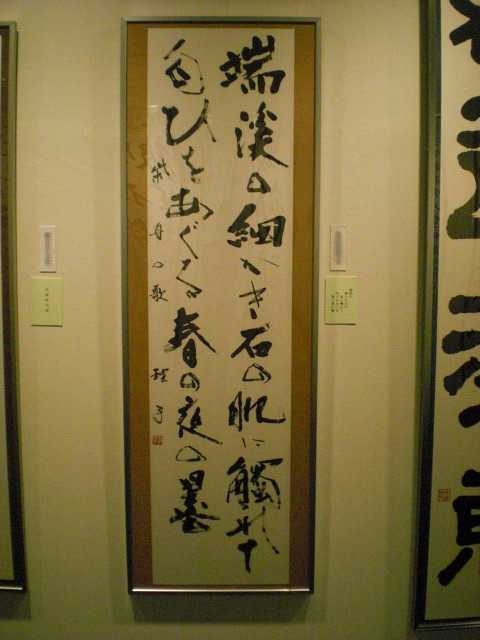
When I was trying to find out more about Tankei suzuri (and who wrote Cさん's poem), I found this interesting rendition from a blog based in Shitamachi:

The writer includes the following by way of explanation:

上記、句に出てくる「端渓(たんけい)」は硯の材料として有名な石の名前です。
中国広東省肇慶市に端渓という川があり、その両岸から産出されるのだとか。
きめ細かくしっとりとみずみずしいのが特徴なんだそうです。。。。
The "Tankei" that appears in the poem above is the name of a kind of stone that's famous for use in suzuri. It comes from the banks of a river called Tankei, near Zhaoqing, Canton (Guangdong), China. It's said to be known for its fine, soft, smooth grain.
Cさん e-mailed today that 先生 said the "hada" in question is more likely the surface of the suzuri (which now sounds like it may have the feel of skin), and that seems to work with the "ni" construction. Probably, then, too, would be better to read "komakai" as referring to the fineness of the grain, rather than to a small inkstone.

Midspring; fragrant suzuri.

Today in shuuji I managed an acceptable oseisho for the winter haiku I've been working on—
手で顔を撫づれば鼻の冷たさよ

te de kao o nadzureba
hana no tsumetasa yo

when i run my hands over my face—
how cold my nose is!

(Kyoshi)
So, it's time to choose a new poem, a haiku or a tanka. Sensei tells me that the season should be mid-spring, so I'll have to see what I can find.

Cさん is working on an interesting one about suzuri:
たんけいのこまかきいしのはだ(え?)(に)ふれて、におひをあぐるはるのよのすみ
tankei no komakaki ishi no hada ni furete
nioi o aguru—haru no yo no sumi
Always tough for me to figure these out, but here's a shot:
端渓の 細かき石の肌(え?)(に)触れて
匂いをあぐる—
春の夜の墨
There seem to be (naturally!) a few ways to read this, depending on what you consider as modifying what, but the sense seems to be that when the poet touches a little suzuri from Tankei, it gives off the light fragrance of sumi ink on a spring night. Sensei told Cさん that Tankei Prefecture, in China (I think), is famous for its inkstones (suzuri, 硯). "Hada ni furete" seems to mean when skin touches stone; whether "hada" is skin or another surface isn't quite clear, but the idea of "coming into contact with" seems appropriate.

I'm even more uncertain about "hada ni furete" because the meter is off. I'd think this could be solved either by adding "e" ("hadae ni furete")—though that would result in an inappropriately seven-mora line, and I'm not sure "hada" and "hadae" are semantically equivalent—or, maybe, by dropping the particle "ni", if that's legal in this case, and saying just "hada furete". I'll have to find my pages of spring poems and look up the original.

Anyway, it's a nice image, no?

Update: I should have mentioned that Cさん's poem is by 尾上柴舟 ONOE Saishuu (1876–1957), a poet and calligrapher who seems to have been involved in "magazine wars" with another school of poetry, passions of human nature vs. ordinary experience (such as sniffing one's suzuri). It would be interesting to, one of these days, attempt to diagram all these schools, journals, literary circles, and teaching relationships. Just about every poet whose work we've written taught, was taught by, or was a colleague of someone else we've written. Maybe I'll try it with genealogy software. :-D

Saturday, February 9, 2013

子猫ちゃんがいますよ。 (kitteh is like a firefly)

I have a kitten (砂糖ちゃん) staying with me while her keepers are off Exploring the World. She's just had surgery and has a cone on, so when she walks her head moves from side to side in a way that I shouldn't find hilarious but totally do. It recalls a poem by Issa 一茶 that fellow student Cさん wrote a while ago, presumably this past summer:

大蛍ゆらりゆらりと通りけり
oobotaru yurariyurari to toorikeri
fat firefly, swooping and swaying, passing by

"Yurariyurari" is one of those concepts that one has to ask a native speaker to explain, and the explanation of which almost certainly will involve mime. It seems to mean dipping and swaying while moving forward, like a hand conducting some slow piece of music, or like a slalom (but with downward movement), or what would happen if you were piloting a plane and moved the controller rhythmically left and right. A site that explicates the poem says this:

大きな源氏蛍が、暗やみの中を大きな弧を描きながらゆらりゆらりと飛んでゆく。〔季語〕蛍
ooki na genji hotaru ga, kurayami no naka o ooki na ko o egakinagara yurariyurari to tondeyuku. (kigo) hotaru

A large firefly flies through the darkness, describing a large arc.

Several questions arise from this: "genji na hotaru"? What can this mean? Genji seems to refer not only to the famous tale, but also to the Minamoto shogunate, but that doesn't seem relevant here. But there's no particle between "genji" and "hotaru", so—?

"Describing an arc" is the phrase we'd use in English to talk about this, but the phrase "弧を描く" catches me because, as is true of so many other things, it seems to have a history that's more phonetic than graphic. I always have to check myself on these phonetic questions, because the response tends to be that there's no particular history there; but it's difficult to ignore that "egaku" combines "e" and "kaku"—writing a picture. There are several kanji for "kaku", I think—writing, composing, painting—but 描く does have the additional sense of 絵. Or not. I never know! Like this cat and her feather toy, I'm always chasing things that can't be caught.

"Tondeyuku" is helpful, because I've wondered about the meaningful difference between "iku" and "yuku", both having the sense of "to go". "Yuku" seems always to imply progression, as in not just going from place to place but the act of going. Here we have 飛ぶ + 行く, "tondeyuku", a progressive flying, with the additional image of reeling back and forth.

And then there's the "keri" ending, concerning which I'm about to throw up my hands. Shirane先生's book on classical grammar discusses き and けり as controversial and devotes about four pages to the distinction, with at least four totally distinct meanings for けり alone. "In contrast to the auxiliary verb ki, which indicates a past that is already distant from and separate from the present, keri begins with the present and looks back retrospectively at the past." So, that clears it all up. Another meaning is "exclamatory recognition". *sigh*

But the site goes on to say this: オノマトペ(擬音・擬態語)の達者として知られる俳人小林一茶は小動物をこよなく愛し、昆虫の中では蛍を詠んだ句も蝶(ちょう)に次いで多い。蠅(はえ)が手足を擦る所作を助命嘆願に見立てた句など、思い入れたっぷりだ Issa liked onomatopoiea (imitative/mimetic sounds) and insects / small animals (fireflies, butterflies) and wrote quite a few poems about them, especially with the theme of flies rubbings their "hands" together, as if asking for leniency (vs being swatted).

I'd like to look at other Issa poems about fireflies, but I have a cat that requires attention, so—so much for that.

Thursday, December 13, 2012

Zouri-bugs?

I'm wearing zouri today. My intent was to take out and properly store all the new kimono items I bought in New York a few weeks ago, for Tankoukai—the Philadelphia Urasenke tea group's official induction as a chapter of Urasenke Kyouto—but the zouri are so comfortable, with their tatami insoles and rubber soles, that I can't take them off.

Anyway, I was looking up the kanji for zouri—草履, "grass shoes"—and Denshi Jisho randomly mentioned that if you add mushi 虫 ("bug") to zouri you get a paramecium. Why on earth is a paramecium a zouri-bug? Cさん suggests it's about the shape, but I doubt that, as zouri are almost rectangular. The need for further research is clearly indicated.

古池に草履沈みて
霙かな
furu ike ni zouri shizumite
mizore kana
a sandal sinking in the old lake—sleet!
—Buson

(Texts tend to translate "哉" as an exclamation point, expressing wonderment, so that's what I've done here. To me, though, it never seems quite appropriate. It's hard to see Buson getting so jazzed about a frozen sandal, and at any rate modern "なぁ" seems more like "hmm".)

Monday, October 1, 2012

小望月の陰波にうつろう。 (Tea class; chabako; Chinese tea.)

Yesterday, at long last, I was able to get back to chanoyu (Tea) class. Such a pleasure! I had some transportation issues (ie, I couldn't find the right gate), so I missed the first student's temae, but I did get to guest for the second student and then go through my own. I thought I'd be rustier than I actually was; most of my errors were more about doubt than about lack of practice.

This evening we gathered as a small group for tea outside, under the (nearly) full moon (小望月!); it was something between a chaji and a chakai. 茶の湯の先生 performed koicha as chabako, tea service from a small box, for ten guests. There was an additional wrinkle for me, as we were seated in parallel facing lines, five and five, and I was the last guest in the first line and had to come up with ways of interacting with the next guest, who was a few mats away and to my right. I ended up saying my おさきにs across the room, and the guest to my right, Aさん, helped me carry the dougu over for haiken. We were on the veranda just outside Shofuso—what's the word for that in Japanese architecture, again?—so we could see the garden and the koi pond, and eventually the lanterns, and hear the waterfall and the cicadas. (Or maybe they were crickets.) At first the sky was cloudy, so all we could see was strong beams from an intriguing art project currently going on in town, but ultimately the sky cleared to reveal a shining, very nearly full moon. Otsukimi was officially last night, but tonight made a beautiful after-party.

And there was a special treat: five of the guests were from the local Chinese tea club, so after chabako they brewed several of their teas for us, in several Chinese (and Taiwanese) styles. As it turns out, Tea in the Chinese style is almost nothing at all like Tea in the Japanese style; pretty much everything is different, from the teas used, to the guest and dougu arrangements, to the movements, to the overarching philosophy. Apparently in China it's thought of as lao-ren-cha (老人茶), "old man's tea", and the styles are organic and really based on experiencing the flavors of the tea in question. One tea may go through several brewings, using very small tea cups, so that the guests can experience the changing of the tea through its stages of opening, strengthening, and weakening. The pouring technique changes according to the kind of tea in use, the stage, etc.—so, for example, whereas for some teas water is poured around the periphery of the teapot to ensure even warming, others need to be agitated in order to reach their full flavor, and others, such as teas roasted for 60 hours, need extremely hot water to "wake up" and release their flavor. The setup is informal and conversational; the paradigm really is of elders sitting together and drinking tea. Until recently there were no "schools", no licenses, no hierarchy; one simply brewed tea. (Now, I'm told, there are some who have opened schools of Chinese tea practice; but these are in the minority.) The Japanese style has schools with exact and distinctive (school-specific) movements, a progression of styles, and a hierarchy of achievement that parallels those of other disciplines, including martial arts, swordmanship, archery (I think), calligraphy, etc. There are blends used in chanoyu, but all of matcha—e.g., a toasted tea probably never be served—so mastering the service is more about technique and achieving the right temperature of tea, froth, ratio of tea to water, and seasonally appropriate aesthetic choices.

One of the Chinese-tea students described chanoyu as "cerebral"; even from my limited experience I don't think I can agree with that. Probably he meant that it's based on more rules, but I think any student of chanoyu would say that it's more about training the muscles—i.e., one learns the rules and practices in order to forget it all and just do the thing, without a lot of thoughts flying through. The same student said that in Chinese service it's considered wrong to let doubt or frustration—or being scalded by the teapot—show on one's face, as it changes the experience for the guests.

Aさん and I and a few others are undisciplined and laughed a lot—always about tea ideas—but the temae was informal, so some chattering was encouraged. I like that the group includes people who have studied other arts—ikebana, taiko, kimono, juujutsu, calligraphy, etc.—so we can all "compare notes" on how those arts differ. I'd like to take up something else, like karate or koudou (incense) to be able to contribute some more insight.

(Edited for line breaks. Why is Blogger so mean about line breaks?)

Thursday, September 6, 2012

女児をかばん入れ連れ去り (girl in suitcase!)。

Recently I've been watching news videos from Japan online—Senkaku and Takeshima, etc. The other day I happened onto this bizarre story of a kidnapping:

昨夜広島市で小学六年生の女の子見知らぬ男に旅行かばんに押し込められてタクシーで連れ去れる事件がありました。タクシーの運転者がトランクの中から聞こえる悲鳴に気付いたことで、警察が駆けつけ、女の子を無事に保護するとともに乗客の二十歳の大学生を監禁の疑いで逮捕しました。
sakuya hiroshimashi de shougaku rokunensei no onna no ko ga mishiranu otoko ni ryokoukaban ni oshikomerarete takushi de tsuresareru jiken ga arimashita. takushi no untenshu ga toranku no naka kara kikoeru himei ni kidzuita koto de, keisatsu ga kaketsuke, onna no ko o buji ni hogo suru to tomo ni joukyaku no nijuusai no daigakusei o kankin no utagai de taiho shimashita.
Last night, in Hiroshima, a sixth-grade girl was packed into a suitcase by a stranger and kidnapped by taxi. When the driver heard her crying out from the trunk, he summoned the police, who quickly freed the girl and arrested the passenger, a 20-year-old college student, on the spot.

昨日午後9時すぎ広島市中区で男の客を乗せて走っていたタクシーの運転手が男の荷物を入れたトランクの中から悲鳴のような声が聞こえるのに気づいて車を止め通行人に警察に通報するよう求めました。警察が駆けつけてトランクを調べたところ、男が積んだ旅行かばんに女の子が閉じ込められているのが見つかりました。女の子は、広島市内の十二歳の小学六年生で、けがはないということです。警察は乗客で東京世田谷区の学生小玉智裕(こだまともひろ)容疑者が女の子を閉じ込めたことを認めたため、そのばで、監禁の疑いで逮捕しました。警察の調べによりますと子供を容疑者が四キロほど離れた広島市西区路上で塾から帰る途中の女の子を連れ去り、近くにあるJRの駅前からタクシーに乗ったということです。 小玉容疑者の旅行かばんは幅が七十センチ、高さと奥行きは三十センチのナイロン製で女の子は体を折り曲げるようにして押し込められていたいうことです。 二人に面識はないということで、警察は犯行の経緯や動機などを詳しく調べています。
kinou gogo kuuji sugi hiroshimashi chuuku de otoko no kyaku o nosetehashitteita takushi no untenshu ga otoko no nimotsu o ireta toranku no naka kara himei no you na koe ga kikoeru no ni kidzuite kuruma o tome tsuukounin ni keisatsu ni tsuuhou suru you motomemashita. keisatsu ga kaketsukete toranku o shirabeta tokoro, otoko ga tsunda ryokoukaban ni onna no ko ga tojikomerareteiru no ga mitsukarimashita. onna no ko ha, hiroshima-shi no juunisai no shougaku rokunensei de, kega ha nai to iu koto desu. keisatsu ha joukyaku de toukyou setagayaku no daigakusei KODAMA Tomohiro yougisha ga onna no ko o tojikometa koto o mitometa tame, sono ba de, keisatsu no utagai de taiho shimashita. keisatsu no shirabe ni yorimasu to kodomo o yougisha ga yon kiro hodo hanarete hiroshima-shi nishiku rojou de juku kara kaeru tochuu no onna no ko o tsuresari, chikaku ni aru JR no eki mae kara takushi ni notta to iu koto desu. KODAMA yougisha no ryokoukaban ha haba ga shichijuusenchi, takasa to okuyuki ha sanjuusenchi no naironsei de onna no ko ha karada o orimageru you ni shite oshikomerareteita to iu koto desu. futari ni menshiki ha nai to iu koto de, keisatsu ha hankou no keii ya douki nado o kowashiku kuwashiku shirabeteimasu.
Yesterday evening, past 9pm, in downtown Hiroshima, a taxi driver who'd picked up a male passenger heard shrieking from the luggage in the trunk, stopped the car, and reported the cries to passing police officers. The officers rushed over and, on searching the trunk, discovered that a young girl had been stuffed into the man's suitcase. The girl, a 12-year-old sixth-grader from Hiroshima, was unharmed. The passenger, Tomohiro Kodama, a student at Toukyou Seta University, was arrested on the spot on suspicion of kidnapping the girl. Police later learned that the suspect had taken the girl from the west end of the city, where she'd been walking home from school, about 4km away, and hailed a cab in front of the Japan Rail station. The nylon suitcase is 70cm wide and 30cm high and deep, so the girl had had to contort (or fold, or double over) her body to fit into it. the man and girl had no prior relationship, so police are still looking into the details, motive, etc., of the crime.
[source]

Weirdness. Maybe they've learned more by now. At any rate, this story is chock-full of useful vocabulary:
tsuresaru: to kidnap
oshikomeru, tojikomeru: to imprison—どんな違いがあるだろうかなあぁ
kankin: confinement
himei: plaintive cries; shrieking
hankou: a crime
utagau, utagai: to suspect or doubt; suspicion
yougisha: suspect
tsuuhou suru: to rat someone out
douki: motive
orimageru: to double over, bend in half?
tsuukou: passing by

kaketsukeru: to rush over
joukyaku: passenger (this one is no big deal, but I like it because the kanji are "to ride" and "guest")

The "ki" in "douki" (機) is particularly insteresting, in that, apparently, it's also the counter for extra lives in video games. 駆 in "to rush over" has the horse radical and also means, funnily enough, to gallop. Will have to look that one up later. "Keii" (details) also is neat, because the kanji are literally the warp and woof of fabric: 経 (tate-ito) and 緯 (nuki-ito). There are a few things I'm not sure of from the video, and I still really don't Get ということです, but fortunately I'm seeing 日本語の先生 this evening and can ask him. 「ということ」ということについての質問があるんですよね。I'll also look up 押し込める and 閉じ込める.

Reminds me of the Genki chapter on reporting crimes (which I think was really a justification for discussing the passive form, for things one suffers, such as being groped on the subway—which the book introduced before the kanji for "tree"!). But now, with this new vocabulary, I don't have to just report crimes; I can commit them, too! 皆を連れ去り犯人になってみましょうね。

Saturday, August 4, 2012

The cherry blossom front.

I've been thinking about the first tanka we wrote in 習字. It seems to refer to a very specific moment in a cherry tree's life cycle, and I've never quite understood it:
薄紅に葉はいち早く萌え出でて咲かむとすなり山桜花 
The part that always really confused me was "sakamutosunari"—must have something to do with blooming, but what? 先生 explained, but I'm slow and still don't get it.

Today I happened upon "-mutosu"—a verb ending that means to be trying to do something, or to be just about to do something. With the usual なり ending (である?), that makes sense! 咲か-むとす・なり.
薄紅に
usubeni ni
pinkly

葉はいち早く萌え出でて
ha ha ichi hayaku moeidete
leaves sprouting quickly (early, too soon?)

咲かむとすなり
sakamutosunari
they're just about to blossom—

山桜花
yamazakurabana
(flowers of the) mountain cherry trees
I don't know much about plants, so I still don't quite understand how the leaves are blooming pinkly (rather than greenly), or whether the leaves are just coming out or are out too soon. Maybe em dashes will help:
pinkly—the leaves having sprouted too soon—
they're about to bloom, the mountain cherry trees 
いち早く also is confusing me—is it that they'll bud soon, or that they've budded too soon? If leaves precede blossoms, whence the pink? Clearly, in the future I'll have to pay more attention to the sakura in Fairmount Park, and not just on Sakura Sunday.

I love that the media in Japan track the "cherry blossom front" (桜前線), the blooming point of sakura up and down the country. It's a really fun idea, and here in the US we have nothing like that.

Kanji tattoo?

I often see people with kanji tattoos, so I like to surreptitiously try to read them. (練習のためですね。 笑) Sometimes the kanji is missing strokes or even reversed, or there's a string of kanji written in different styles—楷書、行書、etc. Since my phone (携帯様) is always with me, when I don't know the kanji I can look them up. So last night at the store I saw a guy with a giant kanji tattoo on his calf—鮨 (sushi). I can understand having a tattoo of something very meaningful, but sushi?! Can one be so fond of sushi as to have its name tattooed on one's calf? Maybe. Or maybe he's a chef at Morimoto. Or something. 人生って、不思議なものですね。

Wednesday, August 1, 2012

Bored courtiers make cameos in Genji, Kokinshuu, Roueishuu, Man'youshuu.

Fun kana reading practice from 習字 lesson, a 1300-year-old poem seemingly making fun of frivolous Nara-period courtiers:
ももしきの大宮人は暇あれ夜桜翳して今日も暮らしつ
momoshiki no oomiyahito (oomiyabito) ha itoma are
yasakura kazashite kefu mo kurashitsu
the courtiers from the great palace 
have too much time on their hands 
wasting time waving cherry branches around, 
this evening, 
again 
Maybe. Or maybe I'm making it too snarky:
the court is at at leisure again today—
waving cherry branches in the evening 

It's by YAMABE no Akahito (700–736), one of the 36 "poetry immortals". This version is from Shin Kokin Wakashuu (新古今和歌集、New Collection of Ancient and Modern Japanese Poetry), which was compiled for the court in the 13th century, for the 300th anniversary of the first Kokin Wakashuu. The poem also appears in the Wakan Roueishuu (和漢朗詠集, Japanese and Chinese Poems for Recitation), compiled a century later, in about 1013.

Some of the imagery seems to have been picked up in Genji, also early 11th c.:
いつとなく大宮人の恋に
さくらかざしゝけふもきにけり
itsu to naku oomiyahito no koishiki ni
sakura kazashishi kyou mo kinikeri
 I miss them always, 
The people of the great palace
  So dear to me—
Ah, but see the day has come
We wore cherry on our brows!
(trans. Edwin Cranston, A Waka Anthology—not sure how the tenses work here)
Cranston explains this scene as from a cherry blossom party (hanami?) given by the Minister of the Right and suggests that it recalls Yamabe's poem from the Roueishuu. Interesting that he takes 翳す kazasu, which I think currently means holding something up over one's head and/or waving it, or shading one's eyes, etc., as actually wearing the cherry blossoms on their head, as garlands or crowns. He also groups や with the preceding thought (itoma are) rather than the next thought (sakura), which shifts it from a substantive (evening cherry blossoms) to a kireji ("cutting" particle) for the preceding line. This や seems to always be written with kana in these poems, so it's hard to tell; by strict meter, it seems not to fit into either phrase. And he approaches the poem as a question: "Are they so leisured?" (Emphasis added.)

Genji's author, the tentatively identified "Lady Murasaki", was the daughter of a poet and scholar in Chinese and was educated in the Chinese classics, so she probably would have been exposed to the Roueishuu, which was completed just as she was finishing Genji. She seems to have known the poet and critic FUJIWARA no Kintou, who compiled the Rueishuu; at any rate they probably would have run in the same circles at court. They may have discussed Kintou's choices, and she may even have seen drafts. (Lady Murasaki and her father also were Fujiwara, though there may have been no particular connection.)

Like Genji, Yamabe traveled with courtiers, the court of Emperor Shoumu, during the twelve years before Yamabe's death in 736—so he'd probably be very familiar with lounging courtiers. Of course, one could argue that to compose a poem about lounging courtiers is even more precious than the courtiers' lounging. ("Was he so leisured? Writing a poem about lounging courtiers, today, again....")

Interestingly, an older version in the Man'youshuu, also attributed to Yamabe (and collected in the late 8th c., much closer to his lifetime), is slightly different:
大宮人は暇あれや梅をかざしてここに集へる 
oomiyahito ha itoma are
yaume o kazashite koko ni tsudoheru
the courtiers are at leisure
they meet up here, waving plum branches (in the evening)
The excellent Japanese Text Initiative also gives the Chinese original of the poem, per the Man'youshuu: 百礒城之大宮人者暇有也梅乎挿頭而此間集有. I can't begin to read the Chinese, but the kanji align (by meaning or sound) with the plum/meeting version in the Man'youshuu. I wonder why the change to sakura from ume. Was this a later revision by the poet? Or did Kintou, who was the biggest of all cheeses in poetics at the time, decide he liked it better that way? If so, what other works might he have altered while "collecting" them?

Funny coincidence: as I was writing this I was surfing around, looking at palaces and temples from the Nara and Heian periods, and I ended up at an online museum, looking at a manuscript of the Roueishuu that I'd found through a listing of national treasures of Japan. (There's a whole category just for documents.) The manuscript is zoomable, so I thought I'd try to read some of it; I focused on the first thing I could kinda read, in a kana section.... sakura kazashite....something something, kurashitsu.... Wait a minute! So I read the line to the right, and, sure enough, it was "momoshiki no oomiyahito ha itoma are". The rest of the lefthand line was the rest of the poem, plus "Akahito". Nice to run into the poem so randomly.

Wednesday, July 25, 2012

Ki no Tsurayuki's soaked sleeves.

In shuuji we've been writing tanka and haiku by some of the great poets, so recently we've also been practicing reading (ie, deciphering) poems handwritten with hentaigana in addition to kanji and kana. すごく難しいと思いますけど、頑張っています。When I get home I try to google them, to read up on the poets and their context. This is one of my favorites so far:

袖ひちて
むすびし水の
こほれるを
春立つ今日の
風やとくらむ
sode hichite (浸?)
musubishi mizu no
kooreru o
haru tatsu kyou no
kaze ya tokuramu 

Soaking my long sleeves,
I took up in my cupped hands
   waters that later froze.
And today, as spring begins,
will they be melting in the wind?
(Steven Carter's translation)

   On this first spring day,
might warm breezes be melting
   the frozen waters
I scooped up, cupping my hands
and letting my sleeves soak ("hijite") through?
 (Helen Craig McCullough's translation)

Interesting differences. "Diagramming" as one would do with an English sentence probably wouldn't be fruitful, but the grammar seems to go like this: 

subject: kaze, wind
what kind of wind? harutatsu kyou no—of today, the start of spring
object: kooreru, frozenness
frozenness of what? mizu, water
what kind of water? musubishi, scooped
what kind of scooped? sode hichite, sleeve-soaking 
verb: tokuramu, (questioning) melt

So—will the breezes of today, the first day of spring, melt the now-frozen water that (I) (earlier) scooped (with cupped hands), soaking my sleeve(s) in the process?

Interesting play of meanings, too, between musubu and toku(ramu). Originally when we read this I thought musubu meant to tie; maybe it was that sode had given me the image of kimono and obi (musubi, the knot in the obi). But it also has the sense of joining hands together, as when scooping water. Toku can mean melting or dissolving (「湖の氷は解けて。。。」), but it can also be (with various kanji) untying, untangling, etc. We also have kooreru (to freeze) nominalized by を, as also happens with aru in the tanka we're doing now (「久しくも。。。」); 先生 tells me the の is commonly omitted in classical poems.

Anyway. I like it because it makes me think of the tsukubai, the basin outside a tearoom by which one stoops to "wash" (purify) one's hands and mouth. What does one do in the winter, when the water's frozen? This would be fun to write someday, to hang up for tea at the start of spring.

Tatami layout; Art Museum teahouse; acquisitions.

A thing that's good about having chanoyu class so far away in the northwest of the city is that the walk home (a bit under 5 miles) takes me past all kinds of interesting things. So, after tea I like to wander wherever I feel like wandering. I often head toward the Philadelphia Museum of Art; the collection is so vast, and so diverse, that I always encounter at least one piece there that says to me whatever I need to hear that day.

This past Saturday, when once again I found myself at the PMA, I had two things on my mind: tea utensils (道具 dougu) and tearoom tatami layouts. Dougu, because I always think about dougu after tea; after hours of handling them and discussing them (during 拝見) it's impossible not to. Tatami configurations, because we'd just had our first class in the new Sakura Pavilion*, in which the tatami for tea practice are configured differently from the practice spaces at Shofuso itself.

Shofuso (I think)

At Shofuso we practice either in the shoin, a 15-mat room, or in the small chashitsu, a square format that's 4.5 mats in overall size but with an inset tokonoma that occupies one half mat in one corner. (See image at right; said to reflect the tearoom in which Rikyuu ended his life, which presumably was at Juurakudai.) The Sakura pavilion has loose tatami that can be configured however the teachers think best, so this time it was a standard four-and-a-half-mat format (below). Of course, since pretty much everything (including every step) in chanoyu is choreographed per the configuration of the tatami, the new format means recalibrating every step! Like migrating birds, forgetting which way is north.

standard 4.5-mat format
Moreover, because the setup is in a tight corner of the building, there's no room for the tokonoma at the far end, so it's at the near end, where usually one would have the nijiriguchi entrance—so, either the first guest has to be furthest from the tokonoma or the guests sit in opposite order! This makes for a lot of adjustments in courtesy bowing and language between the guests. Good to be kept on our toes.


So, at the PMA I was thinking of tatami. The museum has quite a chanoyu collection: an entire teahouse complex, with yoritsuki (waiting room) and tearoom/pantry, connected by a garden, and side galleries with dougu and calligraphy. (Tour the collection through "A Taste for Tea" and "Sunkaraku", here.) So I headed in that direction to check out the tatami and visit the dougu.

The complex was built by the Tokyo architect OUGI Rodou (仰木魯堂, 1863–1941) for his own use, around 1917, and sold to the Museum in 1928. (Ougi built other teahouses, too, but this is the only example outside Japan.) The tearoom itself is structured as 二畳台目 nijoudaime, a two-mat room with a separate three-quarter mat (daime) for the host and brazier, divided by a semi-wall with a rustic 床柱 tokobashira post. It's named Sunkaraku-an (寸暇楽庵), "Fleeting/Evanescent Joys", after a panel that hangs over the garden side, carved by the daimyo and tea master MATSUDAIRA Harusato (1751–1818, called Fumai 不昧 "Not Dark"?). Inside the tearoom is a kakejiku donated by Ougi, "kankokka", which the Museum translates as "look to where you stand". (I can't quite read the kanji, but maybe "官刻下" or "感刻下"—"senses/present"—?) The scroll is by TAKAHASHI Yoshio, who also made some of the dougu, so maybe he and Ougi knew each other.

At this point time was running short, so I buzzed through the dougu, tried to read the calligraphy, and took as many pictures as I could. (One shikishi really stood out, a 17th-century writing of a poem from the 11th-century Wakan Roueishuu; it's been difficult to find out much about it beyond the museum's translation, but I'll keep looking.)

On the way out, I hit the gift shop, supposing that if dougu were to be found anywhere in town it would be there. No such luck, but I did find a rack of brushes, all unique—goat, "beaver" (which 先生 says probably is tanoki), etc. One of them had a curved ox bone on the end, presumably as a hook to hang it up. I bought two: one with a bamboo shaft and black-and-white monkey fur (or so it says)—I've never tried a monkey brush, and it made me think of the colobus monkeys I like at the zoo—and another that's of goat fur, with a severe black handle that reminds me of Darth Vader. Silly, I know, but I can justify buying things from the museum because it supports a good cause.

There were, too, some other Japanese items: colorful tabi, shoes, bundles of old kimono fabric, ceramics など. There were a few general tea sets (not dougu), and one of them demanded that I take it home. It's decorated with a calligraphed poem:
東風吹かば
にほひおこせよ
梅の花
主なしとて
春な忘れぞ
kochi fukaba
nioi okoseyo
ume no hana
aruji nashi tote
haru na wasure zo
It made me happy, because it's fun to try to read the writing, and 忘れぞ (忘るな) is like the tanka we're working on now, 忘れし—the same idea of (not) forgetting. "The eastern breeze blows and brings spring fragrance; plum blossoms, even though your master isn't around, don't forget to spread your fragrance." Or something. I've read that 匂い has an older sense that's not about scents. おこせよ is probably some kind of awakening (起こす). The last three words were modified in a later collection—almost two centuries later, that is—as 春を忘るな, which makes sense as "don't forget spring". Apparently when the poet was exiled from Kyouto he missed his plum tree so much that it was dug up and taken to him. (There are 6,000 plum trees at the shrine to him in Fukuoka, including the "flying plum" 飛梅 that's said to have flown to him on its own.) Some of the writing on the tea set is a little weird, so 先生 says it probably was written phonetically. I like it, though, and am glad to have met it.

Here's the fun part: the poem is by the famous (and now deified) SUGAWARA no Michizane (who also appears in the Wakan Roueishuu). What particularly amuses me about it is his name: "michi" is another reading of the "dou" in "dougu", and "zane" is only two strokes different from the "gu". So, I went to the museum looking for dougu 道具 but instead found Michizane 道真. あははは。

*The "new" Sakura Pavilion is, in fact, two single-room brick buildings built for the 1876 World's Fair that Shofuso recently acquired and renovated for classes and storage; originally they were built as "comfort stations" (i.e., 手洗い). I snuck in once, before the renovation, when the original space-architecture and plumbing fixtures all were still in place. Very different from modern public restrooms! And the gents' space was in layout very little like the ladies' space. 面白いですね。

Wednesday, July 18, 2012

Haiku contest!

「上級へのとびら」という教科書は、生徒が勉強できるためのサイトがあります。今日サイトに行って、俳句・川柳のコンテストがあるのを覚えました。(「見ました」?「聞き及びました」?「見及びました」?そのような動詞、あるだろうと思いますが。) だから、俳句を作って、提出してみるのが面白いかもしれませんね。今晩日本語のレッスンがあるので、先生に相談しようと思っています。茶の湯の虫についての俳句は、下手すぎますかなぁ。 あとは—?

Earlier today I was reading the Tobira textbook and visited its website for students (which is replete with awesomeness), and I noticed a nav item about haiku. Turns out they're having a haiku contest! It would be fun to try to compose one, just for the heck of it.* Maybe I should send that one from tea class about the fly, but it's hard to tell whether the grammar, etc., is OK. Probably not. I could change 様 to さん without affecting the mora count. I'll talk with 日本語の先生 about it this evening.

(Funny that I sometimes have to think about "writing" a poem, vs "composing"; in shuuji we write 書 poems, but not poems we composed 作! 習字のレッスンではよく句を書いてみますが、自分の作った句じゃないんですよ。。。。)

*"For the heck of it" reminds me that I've never found a satisfactory Japanese equivalent for the English "why not?". It's a very important phrase! "Why would you want to send in a haiku?" "Why not?"

Tuesday, July 17, 2012

久しくも。。。。 (Cicadas for summer.)


今の夏についての短歌は、これです:
久しくも hisashiku mo
聞かざるからに kikazaru kara ni
そのあるを sono aru o
忘れし蝉の wasureshi semi no
鳴きいでにけり naki ide ni keri

the cicada's chirping—so long since I've heard it, I'd forgotten
Or something along those lines. I like that that structure in English has some ambiguity, between "the chirping of the cidada" and "the cicada is chirping" (鳴き出でにけり). The けり ending suggests continuity, like the waves of cicada song one hears in the woods on a summer night. It's by KUBOTA (窪田空穂, 1877–1967), a poet and literary scholar from Nagawa (formerly Wada), Matsumoto, Nagano, and the more I write it, the more I like it. (Amazingly, the poem isn't googleable, so, here: 久しくも聞かざるからにそのあるを忘れし蝉の鳴きいでにけり. Now it is.)

We chose some hentaigana—fun to try different combinations!—and historical models for the kanji, and now we're working on the whole thing in chirashi, something like this:


Really fun to write, especially since it has several characters I particularly like: 母(も), 聞, 沙,ら,曽(そ),忘,支,爾(に), and especially 希(け), which starts like a little swordfight and ends with the wrap-and-pull action that's so much fun in ゆ.Certainly not without its challenges, though; I'm not very good with the sliding of し, and I find some of the other shapes really difficult—not to mention spacing, chirashi, etc., etc.... でも、いつものように、頑張りましょうね。

Corrections: (1) accidentally had 着 instead of 聞; still need to fix 沙.

Monday, July 9, 2012

Tanabata tea; making dougu?

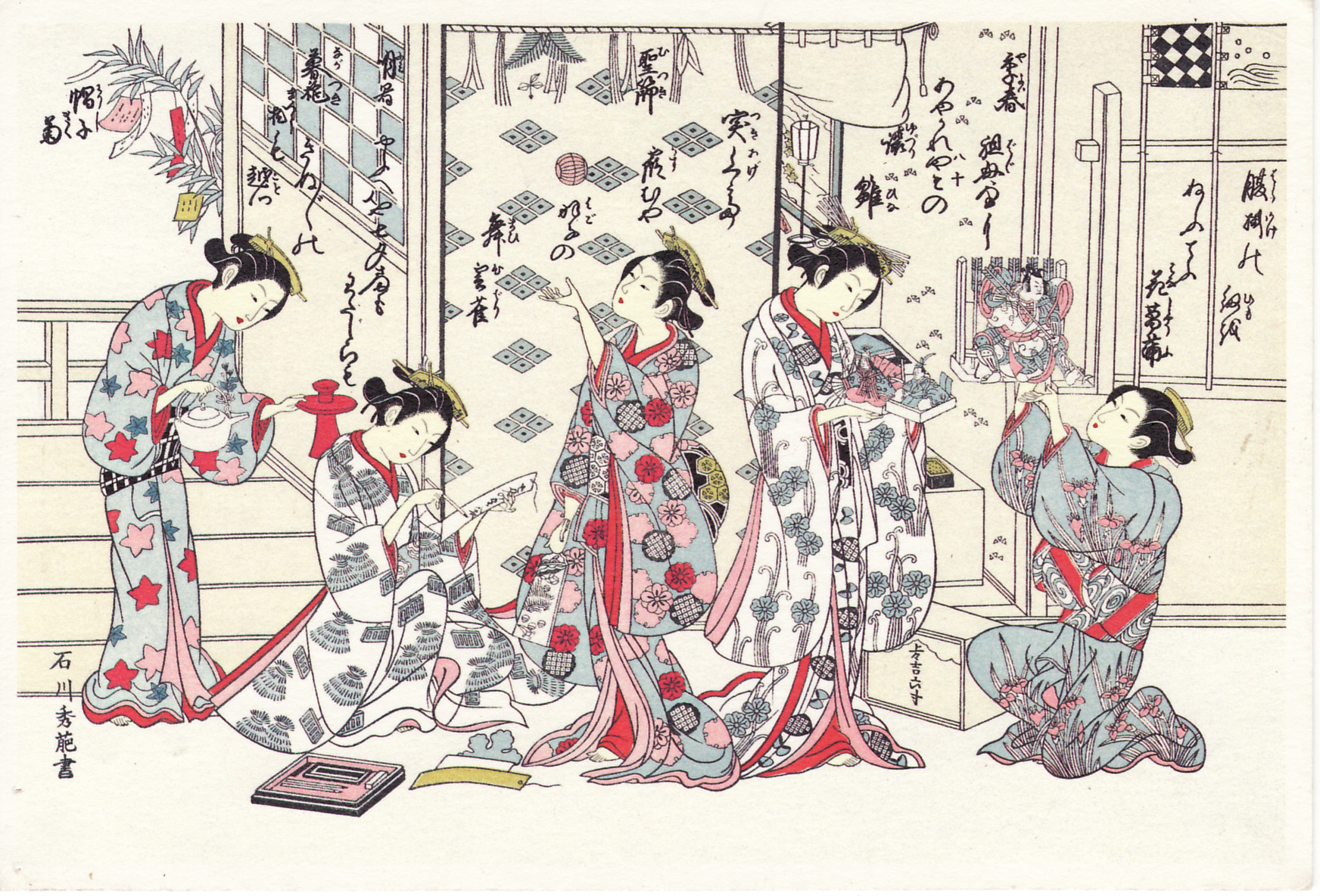
Tanabata in Edo, by Hiroshige
This past Friday Shofuso celebrated Tanabata, the Star Festival—technically a day early (六夕?), but sometimes one has to sacrifice the ideal for the feasible! We met at the Japanese House and tied our wishes to a bamboo tree, and then our tea teachers served first koicha (dark/thick tea) and then usucha (loose/thin/light tea) in the fifteen-mat room (書院), for about sixteen guests, with several hantou to keep things moving. The sweet for koicha was of agar-agar*, with beautiful flecks of gold. As we proceeded, the sun went down; this made haiken (examining the dougu, which for this occasion were especially fine) a bit of a challenge, but by the end of usucha we could see stars—Orihime and Hikoboshi stopping by for a visit! It was a lot of fun, and good practice for me, and it's always nice to see visitors experience tea.

kuro-raku
Attending these two tea gatherings recently has me thinking about dougu (tea utensils). One of our teachers makes chawan, and I think I'd like to give it a shot; we do have some pottery studios here in town, and it would be a fun (and useful) skill. Reading up on chawan procedure leaves me a bit daunted, though; it's one thing to throw a functional bowl for general use, but, of course, for chanoyu a bowl has to meet certain specifications—shape and texture of the rim and foot, grain and shape of interior (for successful whisking of tea), glaze patterns (to mark the front), etc. I guess one saving grace is that some of the best bowls are the most "wabisabi", humble and a bit uneven; I particularly like bowls in the kuro-raku 黒烙 style, like the 17th-century bowl at left, for the beautiful contrast of the green tea against the dark glaze. But I wouldn't want to try whipping tea in a bowl with an uneven base. This excellent post, and this follow-up, from the blog of a chanoyu practitioner, detail the must-haves for a chawan.


*Agar-agar is great for tea sweets, but you can also use it to culture bacteria, run polymerase chain reactions, house ants in an ant farm, make dental impressions, and, probably, to clean windows and ovens. There's nothing it can't do!

Friday, July 6, 2012

茶会! (In which we meet for tea.)

Attended a very special 茶会 tea gathering yesterday, the first official chakai in a friend's 茶室 tearoom in her home. It's a two-mat room; our hostess told us this was the last style of tearoom that Rikyuu built, and it's easy to see why—so intimate (and efficient)! We did the whole thing, from washing at the 手水鉢 chouzubachi through koicha and usucha. We started off with an amazing meal together in the tearoom—marinated salmon with toasted nori, taro root and stems, a rice cake with greens and edamame, a dish of pickled items (including daikon and a really interesting ginger flower), miso soup with fiddlefern heads, and delicious cold osake, which was perfect for a hot July day. 超美味しかったよ。 本当にご馳走様でした。 We finished the meal with blueberries in cool, clear agar-agar (an algae-based gelatin that functions as Jello but without the hooves)—incredibly yummy. So much work for our hostess!

We retired to the machiai to relax and chat a bit before koicha; then back into the 茶室 for koicha and then usucha. The first 茶碗 tea bowl was dark and friendly, and the viscous green residue of the koicha contrasted beautifully with the dark glaze, like a deep forest when the trees are wet. (Our hostess told us that Rikyuu liked dark bowls for exactly that contrast.) The second was much lighter and had a special property of "blooms"—some kind of microbe embedded in the bowl that expands colorfully in reaction to hot water (and then shrinks again as the bowl cools). For koicha the 茶入れ chaire was also of a rich, darkish glaze, with a very helpful drip to tell us which end was the front. :-) (This is important because things always have to face the right way, and the right way tends to vary. A lot.) The 仕覆 shifuku (cloth container) for the chaire was of a bright gold stitching on lighter background, almost a brocade, and, with its darker cord, had a funny way of, when laid on the floor, actually looking like a teapot. I think the name for this style is 茶筅飾り, but really it was to honor first use of one of our hostess's 水差し misuzashi, a portly ocean-blue guy perfect for summer. In the tokonoma, a shikishi of 薫風, a warm summer/fragrant breeze, and thyme from the garden for fragrance. Truly, a great pleasure, and a great honor to be 正客 first guest, even though I'm not very good at it. へへへ

This morning I tried to write a few new things, just for fun. 四字熟語 four-kanji idioms and things appropriate for tea—和敬清寂 and 喫茶去—and some other things that I just like, like 順風満帆 ("fortuitous wind, full sails", which always makes me happy), 七転び八起き ("seven times falling, eight times rising"), and of course 酔生夢死. My writing was egregious, even by my own low standards, so I'm glad that Tanabata is coming up so I can wish for better writing. 今晩の七夕祭りのための特別な茶会、本当に楽しみにしていますよ。

(特別の。。。特別な。。。どちらがいいかなぁ。。。)

Wednesday, July 4, 2012

Happy Fourth!

It's Independence Day here in the US, the day on which we both perpetrate and endure many platitudes about democracy while in fact we continue to erode politically the very cultural narrative (populism, progress, pursuit of happiness) that the holiday is meant to celebrate. Just sayin'. But happy Fourth! 今晩は花火ですね—"fire flowers" this evening. Tomorrow tea practice with a friend and, later, 日本語のレッスン, and then on Friday 休み and then Tanabata 七夕祭り in Fairmount Park. Hopefully, tea class on Saturday and 習字 on Saturday or Sunday. Then, on the 14th, Bastille Day, which we celebrate with much enthusiasm here in Philadelphia (which considers itself the "sister city" to Paris; our own Ben Franklin was ambassador and, it seems, rather a rake).* A good time will, undoubtedly, be had by all. 夏の祭りは大変楽しいと思いますね。酷く楽しいでしょうね。(笑) ガハハ

今朝習字を練習してみましたよ。 I did some writing practice this morning, first 俳句 and 習字 (行書で「澄懐」) and then, in honor of the day, 独立 (dokuritsu, "independence" but, more literally, "standing alone"**) and 自由 (jiyuu, "liberty", but because it derives from 自 self + 由 rationale I like to think of it as "thinking/choosing for oneself"). My holiday writing wasn't very good, but I'm giving myself a by for household ephemera. (Is "give a by" the phrase? 英語はアメリカ人にもときどきちょっと難しいと思いますね.***)

Tonight in theory I am at an event but really I'd rather continue trying to read and translate the rest of the summer haiku from 「俳句編」.

I discovered today that we have a giant Asian grocery store right here in Center City—which is great because it means I can get some things I need for tea without taking buses or trains. I was looking for wagashi for tea tomorrow, and though I didn't find what I really wanted (artisanal wagashi—not likely this side of New York), I found some 良さそうな抹茶, macha that looks like it'll work at least for usucha, and then various okashi and lots of random things that I'm just looking forward to exploring. (I've never in my life had an entire fish in my freezer, but a milkfish resides there now.)

本当に夏になっていますね。


*The tradition here for the Quatorze is to have someone dress as Marie-Antoinette and toss Twinkies or some substitute ("qu'ils mangent de la brioche", which probably she did not in fact say) from the ramparts of Eastern State Penitentiary, which is the closest building we have to the Bastille. 

**ですが。。。「独」というのはね。Per Henshall, 独 derives from kemono-hen, the (wild) dog radical, and a caterpillar, formerly written as 属 (and older forms) but now written as the indefatigable mushi 虫, generic insectness. Dog and caterpillar together came to mean unity, fighting for a single cause (which would be what, exactly?) and then, eventually, singularity. It also means Germany; I can't even begin to engage that.

***In saying this I'm making a reference to an interesting point that bikenglishさん made in his blog, about problems with prepositions when they refer to unusual physical situations—behind the yellow line? below it? beneath it? In the train, or on it? (When I was studying literary critical theory we'd have thought of it as intertextuality.) Last week at 習字 we read a little from the 古今和歌集, to practice reading hentaigana, so since then I've been thinking about 本歌取り honkadori, the poetic practice of alluding to a classical poem, in order to both demonstrate erudition and link one's own work to a larger tradition. I wrote something about it, I think, involving Sosei and 袖ひちて むすびし水の こほれるを 春立つ今日の 風やとくらむ dipping kimono sleeves in freezing water and 春たてば 花とやみらん白雪の かゝれる枝に うぐひすのなく nightingales on branches in the remaining spring snow, and Princess Shikishi waiting in vain for her lover, but it seems that I now have more drafts than actual posts. Story of my life!

Sunday, July 1, 2012

Haiku; Ootsubukuro (repaired).

(Blogger decided to delete this one. Yay.)

I don't know why I have haiku on the brain these days, but I do. Yesterday at tea class, we could hear a waterfall in the pond and a frog croaking, so, naturally,
古池 / 蛙飛び込む / 水の音
furu ike ni kawazu tobikomu mizu no oto
Into the old pond the frog jumps—sound of the water (or: splash!)
Bashou, 1686
And when a fly buzzed in cavalierly and circled the tray of お菓子 tea sweets,
塗盆を蝿が雪隠にしたりけり
nuribon o hae ga secchin ni shitari keri
the fly makes the lacquer tray a bathroom
Issa, 1824
And then, when as I was walking home it rained on me,
着ながらにせんだくしたり夏の雨
kinagara ni sentaku shitari natsu no ame
washing my clothes while wearing them—summer rain
Issa, 1821
This morning when I came downstairs I met a cockroach, who was investigating the running clothes that I'd thrown on the floor yesterday. (My house is 200+ years old, so such encounters do happen from time to time.) He perked up when I entered the room, and then we looked at each other for a few seconds; then I picked up a binder of legal opinions that happened to be nearby and smashed him. As I learned yesterday, Issa, who practiced 浄土仏教 "Pure Land" Buddhism, also thought about the ethics of killing insects:
蝿打てけふも聞也山の鐘
hae uchite kefu (kyou) mo kikunari yama no kane
swatting a fly, today again I hear the mountain (temple) bell
1806

蠅打に敲かれ玉ふ仏哉
hae uchi ni tatakare tamau hotoke kana
in swatting a fly, hitting the Buddha
1808 


蝿一つ打てはなむあみだ仏哉
hae hitotsu utte wa namu amida butsu kana
swatting a single fly—praise to Amida Buddha!
1814

蝿打やあみだ如来の御天窓
hae utsu ya amida nyorai no onatama
swatting a fly—Amida Buddha's holy head
1815
(D Lanoue's translation of "holy head"; 御天窓 might also be otenmado, but I'm sure it has specific meanings and he's reading it correctly.)

やれ打な蝿が手をすり足をする
yare utsuna hae ga te wo suriashi o suru
don't swat the fly! he's rubbing his feet together [as if in prayer]
1821
In fact Issa wrote quite a few poems about swatting things. (Then again, as Issa wrote about 20,000 haiku, there probably are quite a few about anything!)

Anyway. In tea class yesterday we did usucha and then koicha, a new-to-me temae called Ootsubukuro in which the natsume is wrapped in not the fukusa but a bag similar to bags formerly used to carry grain from Ootsu to Kyouto (about 7 miles away). Apparently Rikyuu's wife made the first Ootsubukuro and Rikyuu developed the style. Me, I'm eagerly awaiting 洗い茶巾 araijakin season (July and August); the temae that emphasizes the sound of water—beautiful, and perfect for the summer.